The low cost and low power solution to XP gaming?
Release Date: December 2011 RRP £105
Purchased: November 2024 £10.29 + shipping
Introduction
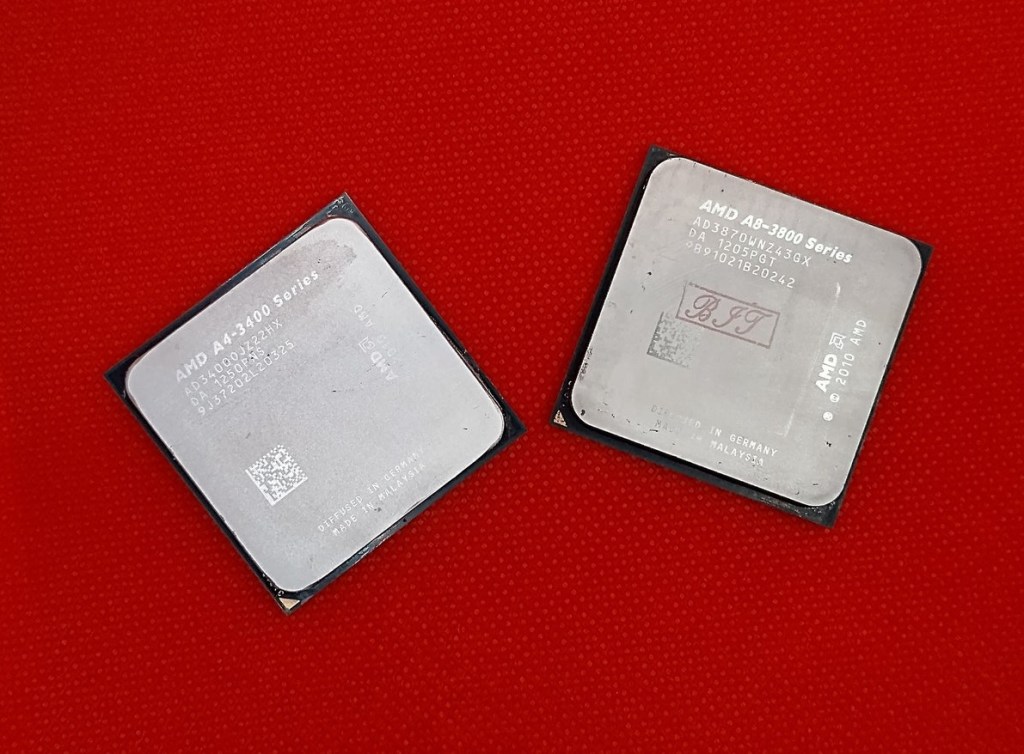
I had some fun testing the A4‑3400 earlier Here. It handled the older DirectX 9 games fairly well, although it showed some strange behaviour and its performance dropped off in titles from the later part of the decade.
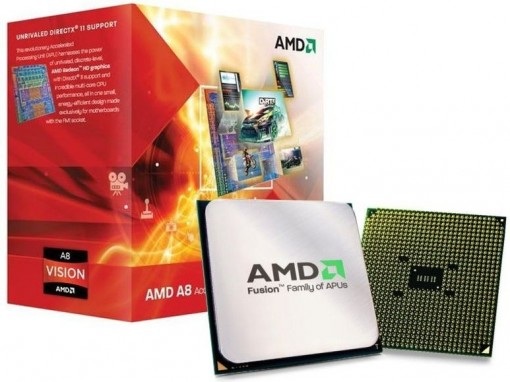
That made me wonder what you could get out of the top‑tier FM1 APU. So, in comes the A8‑3870.
I was having no luck on Ebay so I turned to Ali Express and found a reasonably priced A8 for £12.35 delivered.
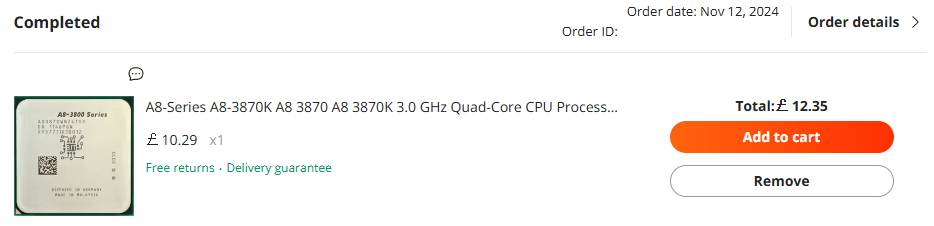
The title was a bit misleading, since there was no clear indication whether I’d be sent the unlocked “K” processor or the standard 3870. I decided to order it anyway. Predictably, the non‑K part arrived. So, no overclocking for me. A shame, because reports from the time suggested the graphics core could be pushed from 600 MHz up to around 900 MHz.
| APU | Cores | Base Clock (Mhz) | Boost Clock(Mhz) | L1 Cache (Per Core) (Kb) | L2 Cache (Mb) | GPU | TDP | Memory Support |
| E2-3200 | 2 | 2.4 | N/A | 128 | 1 | HD 6370D | 65 | DDR3-1600 |
| A4-3300 | 2 | 2.5 | N/A | 128 | 1 | HD 6410D | 65 | DDR3-1600 |
| A4-3400 | 2 | 2.7 | N/A | 128 | 1 | HD 6410D | 65 | DDR3-1600 |
| A4-3420 | 2 | 2.8 | N/A | 128 | 1 | HD 6530D | 65 | DDR3-1600 |
| A6-3500 | 3 | 2.1 | 2.4 | 128 | 3 | HD 6530D | 65 | DDR3-1866 |
| A6-3600 | 4 | 2.1 | 2.4 | 128 | 4 | HD 6530D | 65 | DDR3-1866 |
| A6-3620 | 4 | 2.2 | 2.5 | 128 | 4 | HD 6530D | 65 | DDR3-1866 |
| A6-3650 | 4 | 2.6 | N/A | 128 | 4 | HD 6530D | 100 | DDR3-1866 |
| A6-3670K | 4 | 2.7 | N/A | 128 | 4 | HD 6530D | 100 | DDR3-1866 |
| A8-3800 | 4 | 2.4 | 2.7 | 128 | 4 | HD 6550D | 65 | DDR3-1866 |
| A8-3820 | 4 | 2.5 | 2.8 | 128 | 4 | HD 6550D | 65 | DDR3-1866 |
| A8-3850 | 4 | 2.9 | N/A | 128 | 4 | HD 6550D | 100 | DDR3-1866 |
| A8-3870K | 4 | 3 | N/A | 128 | 4 | HD 6550D | 100 | DDR3-1866 |
Being a 100 W part, I also treated it to a larger tower cooler with RGB. The stock cooler that came with the A4 looked completely unimpressive, and the rainbow lighting clearly adds a few extra frames on its own.
The A6 and A8 processors in the lineup support faster DDR3‑1866 memory. Since the CPU and GPU share the same pool of RAM, it seemed like a worthwhile upgrade.
Like most hardware from this era, DDR3 is extremely cheap. I picked up 2×4 GB of Kingston Fury for £1.20.
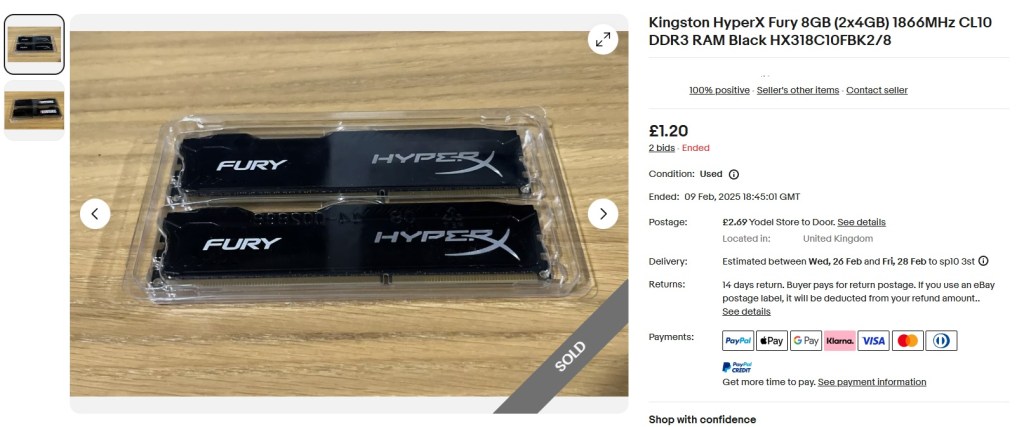
This, along with the SSD, should let the APU perform close to its best, although the ultra‑budget motherboard may be holding things back a little.
The APU
More details on Llano and the FM1 platform can be found in the A4 article, so there’s no need to repeat everything here.
The HD 6550D GPU inside this processor comes with 400 stream processors, 8 raster operation pipelines and 20 texture mapping units. It’s a clear step up from the HD 6410D found in the A4, even though both share the same 600 MHz clock.
There are four CPU cores rather than two, but the internet insists that Windows XP doesn’t really benefit from more than two cores, and the clock speed is only 300 MHz higher. So the uplift may not be as dramatic as the specs suggest.
In both cases, I’d assume the GPU side of the APU is the limiting factor for gaming performance anyway.
| GPU Model | Shaders | Render Operation Pipelines | Texture Mapping Units | Core Clock |
| Radeon HD 6370D | 160 | 4 | 8 | 443MHz |
| Radeon HD 6410D | 160 | 4 | 8 | 600Mhz |
| Radeon HD 6530D | 320 | 8 | 16 | 443Mhz |
| Radeon HD 6550D | 400 | 8 | 20 | 600Mhz |
Here’s GPU-Z screenshot of my example showing everything is as expected.:
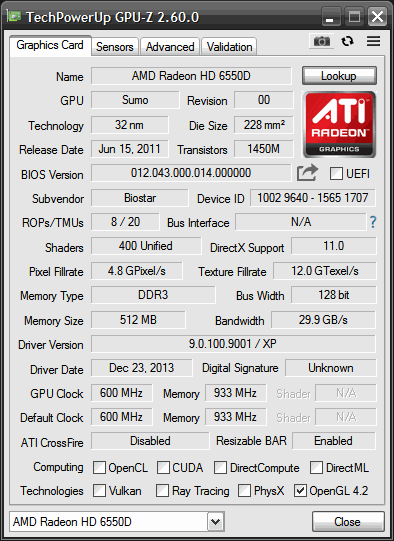
The closest discrete GPU equivalent would be something like the HD 6750 DDR3 version or the GeForce GT 430.
So how much better is the A8‑3870 compared with the A4‑3400? It cost more than twice as much when new, but is it twice as good at playing classic Windows XP games? Probably not, but let’s take a look.
The Test System
- AMD A8-3870 APU incorporating Radeon HD6550D
- Biostar A55MLC2 Motherboard
- 2 x 4Gb DDR3 1866Mhz Ram (showing as 3.5Gb on 32 Bit XP)
- Windows XP (build 2600, Service Pack 3)
- 2x 120Gb SSD’s (Ali Express unbranded)
- The Latest Drivers from AMD’s website 9.0.100.9001
Deus Ex: Invisible War (2003)

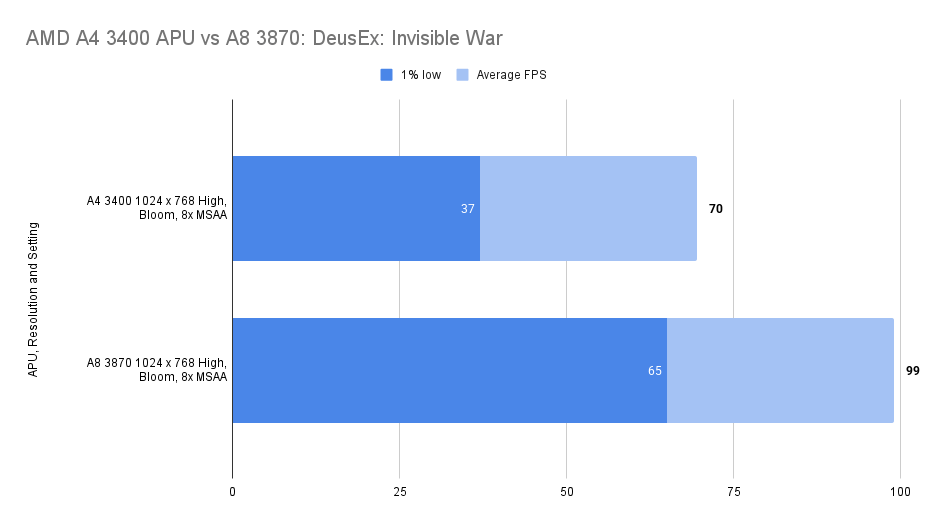
Playable before but a 41% increase in average framerate over the A4 3400 was very welcome.
Not bad at all on this DX7 era game.
Benchmark Two: Far Cry (2004)

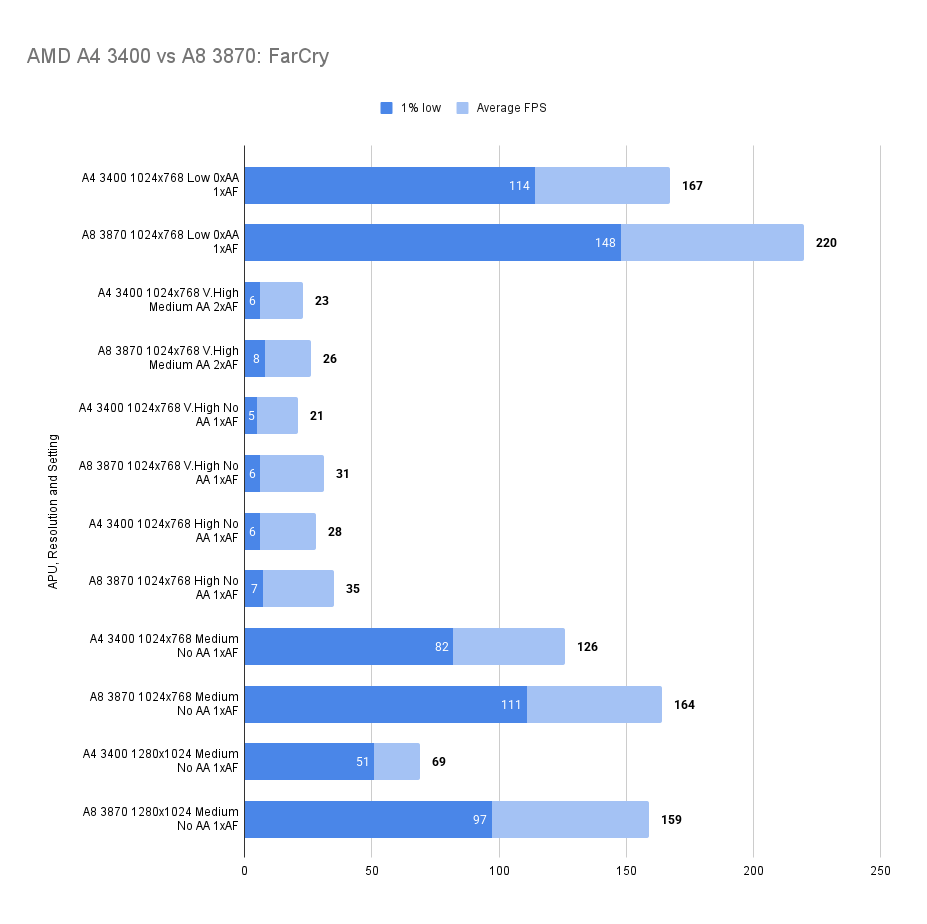
Nothing that the A8 3870 brings to the table did much to fix whatever was holding this game back in High and Very High Settings, which is a shame.
Discarding the strange results, we’re looking at roughly a 65% increase over the A4.
Benchmark Three: Rome: Total War – (2004)
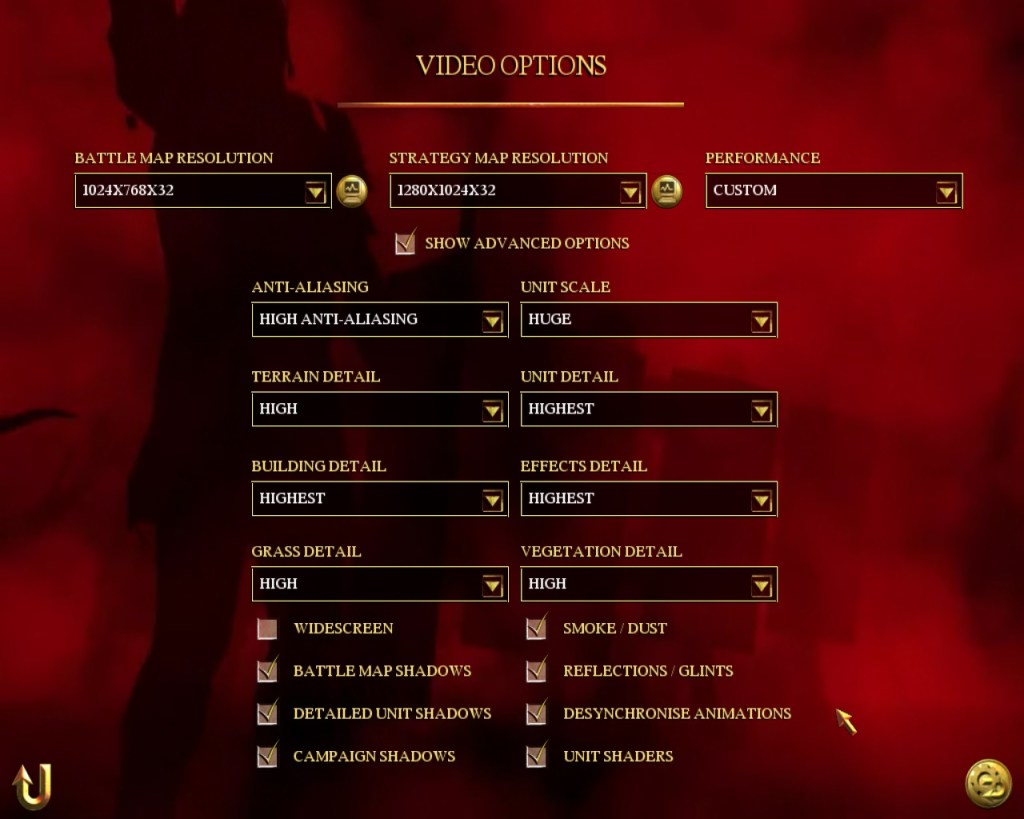
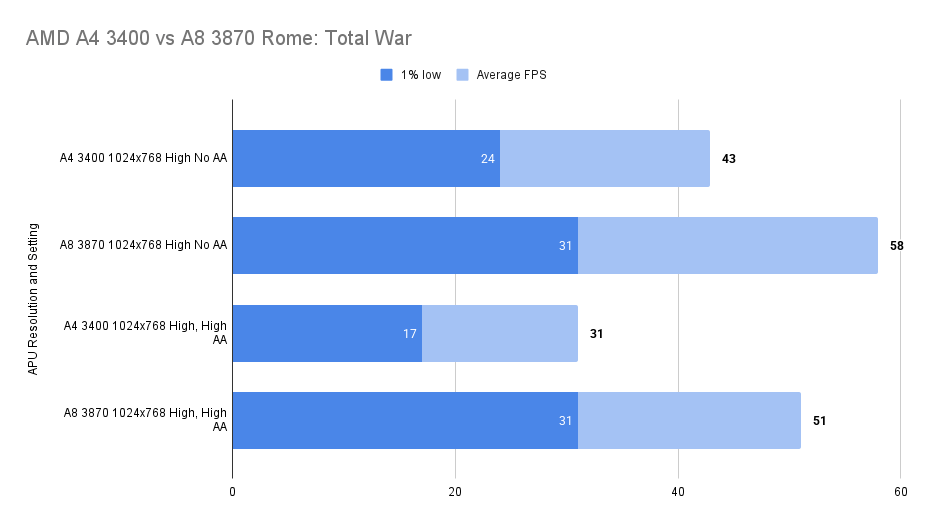
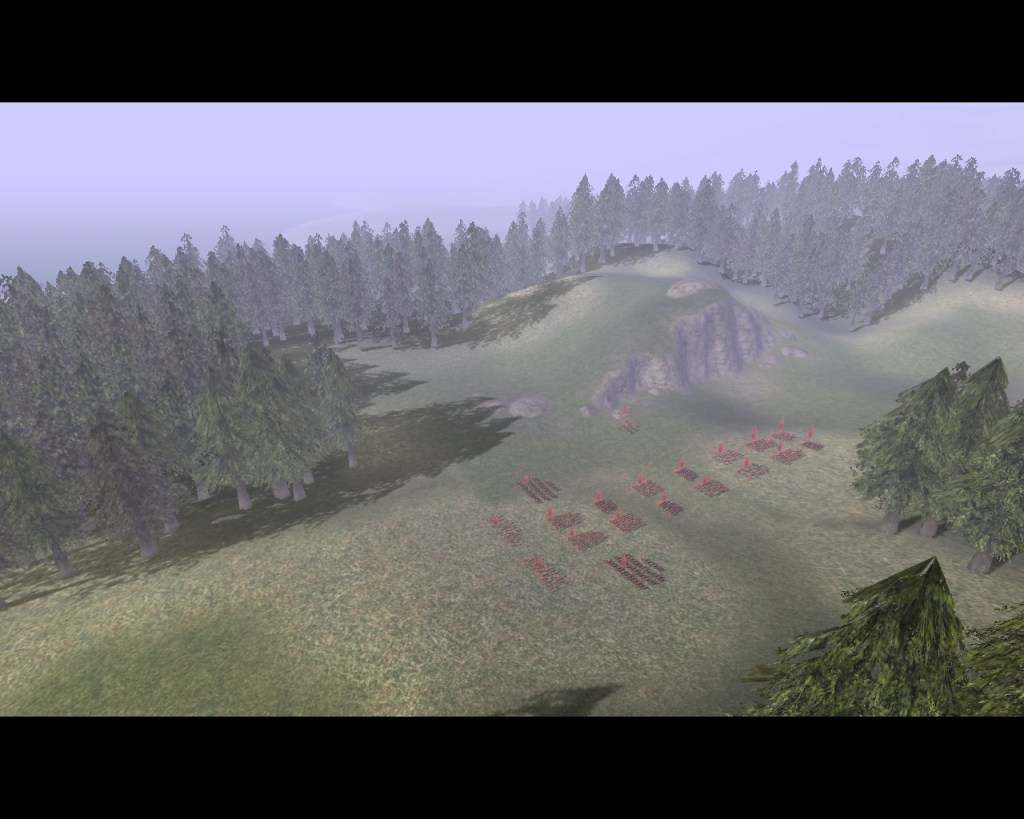
Rome: Total War shows an average improvement of around 50%, with anti‑aliasing performance being noticeably better. Strangely, high AA had almost no impact on the A8’s framerate.
I found that odd enough to retest it twice, and I still ended up with the same results.
Hitman: Contracts – (2004)
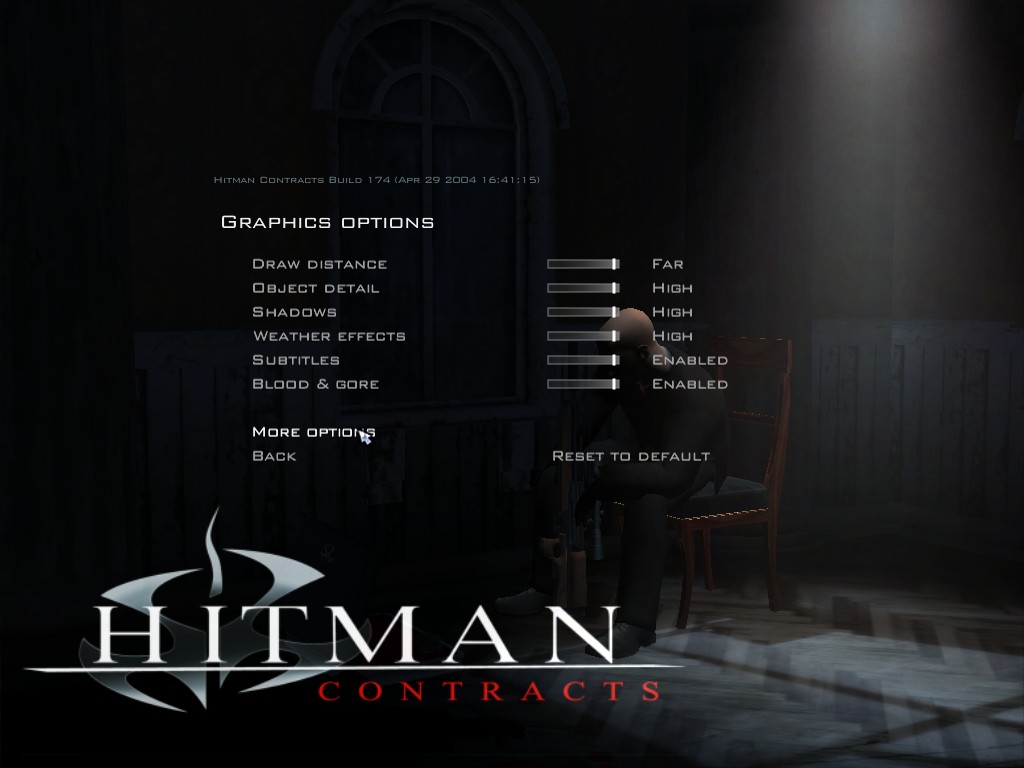
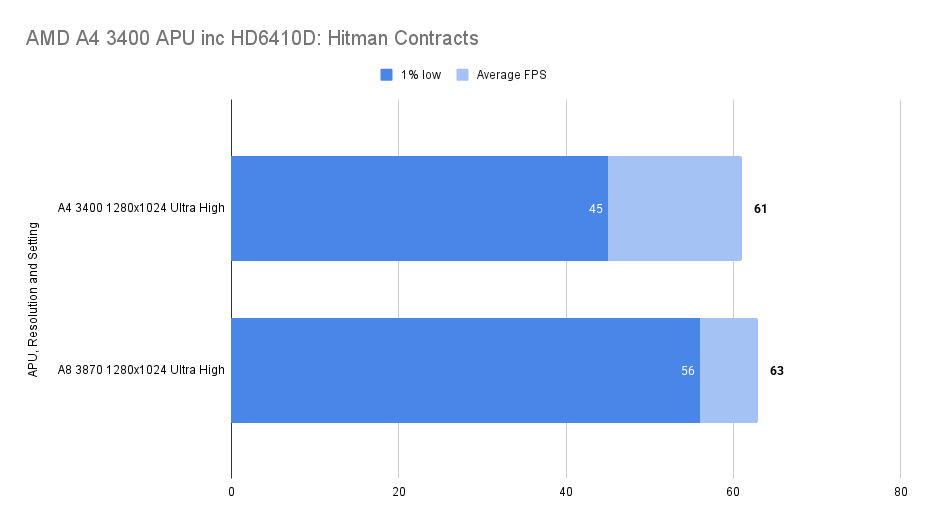
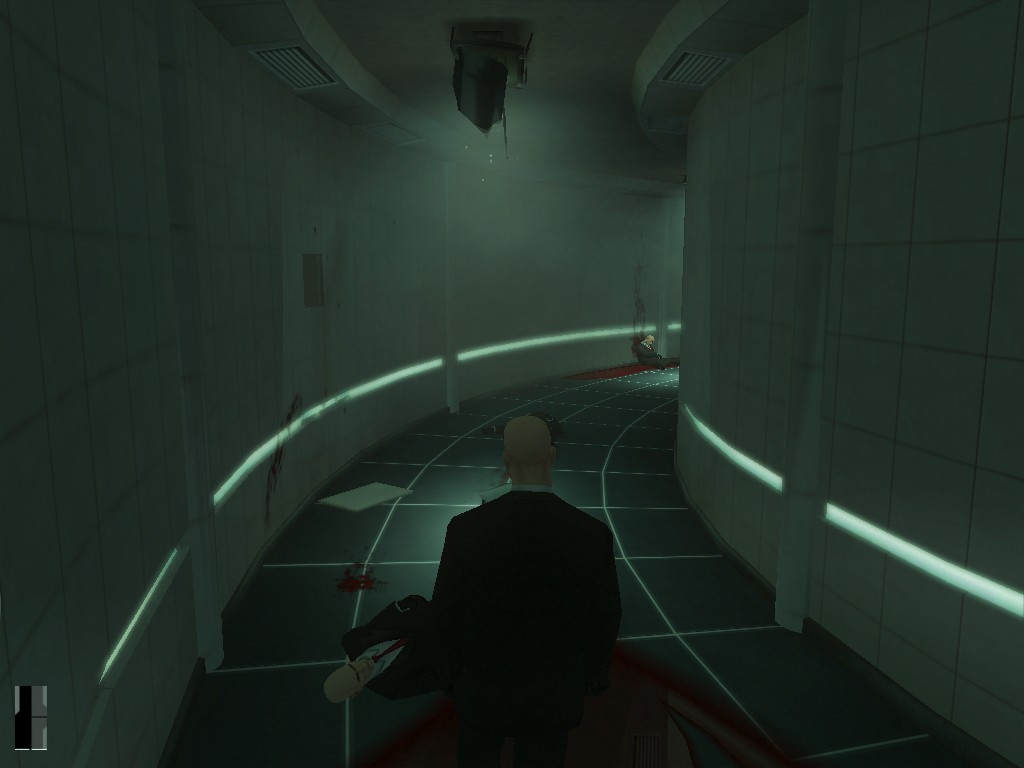
It seems this game is capped at 60 FPS, and there was no option in the menu to disable it. Even so, the increase in the 1% low figure shows that things are running a little faster, although it isn’t something you’d really notice while playing.
Star Wars Republic Commando (2005)
Another game where the framerate seems to be capped, this time at the 75Hz rate of the monitor I was using.
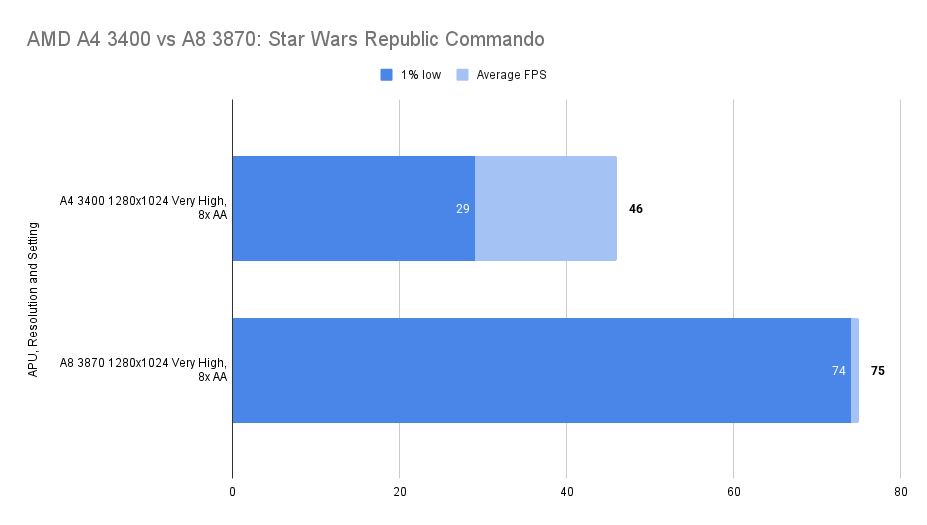
Quite a difference in performance tough, absolutely pinned to the limit with everything turned on, a great result for the A8.
It wouldn’t be fair to measure the percentage increase though with the faster APU being held back by the software.

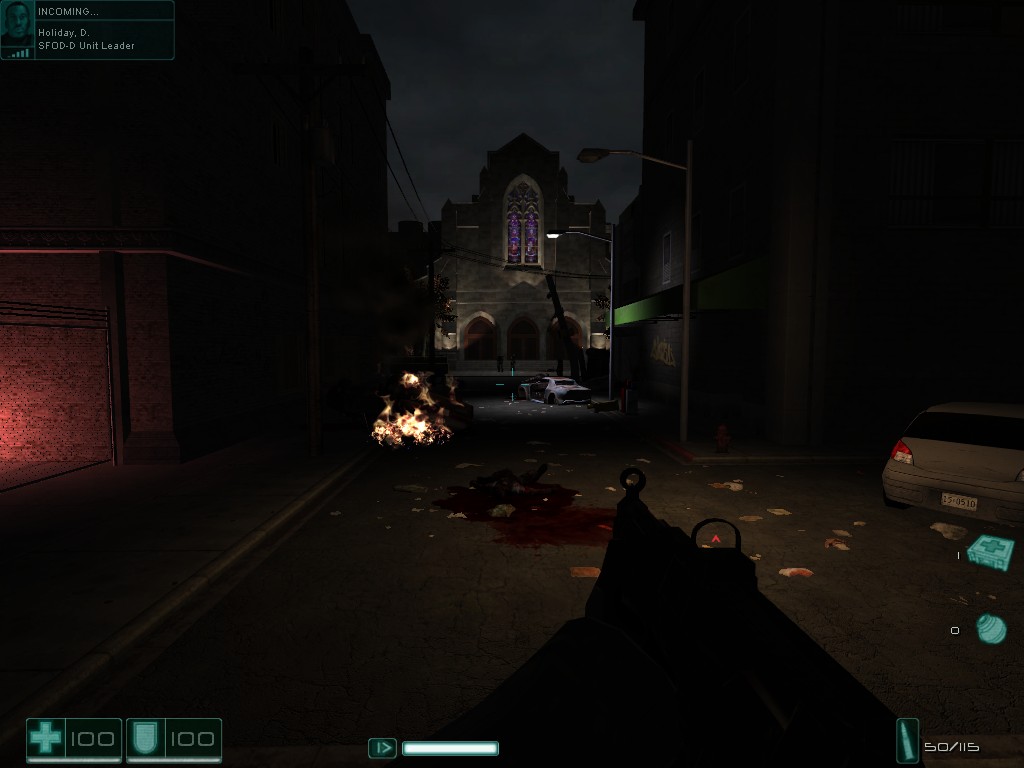
F.E.A.R Extraction Point (2005)
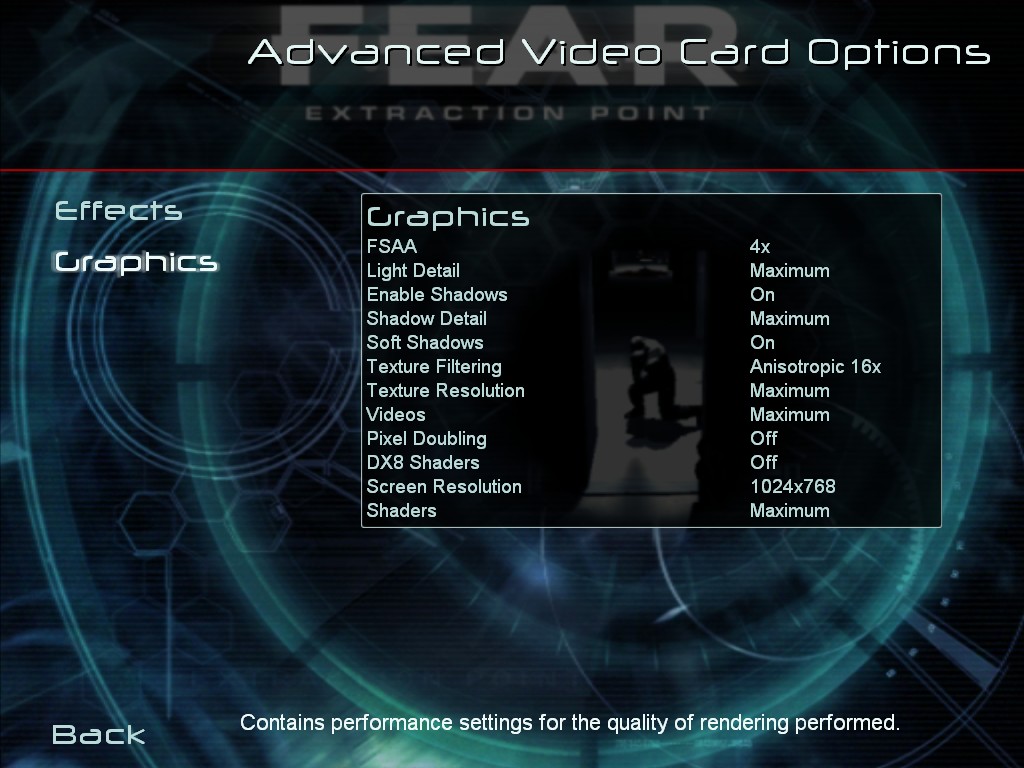
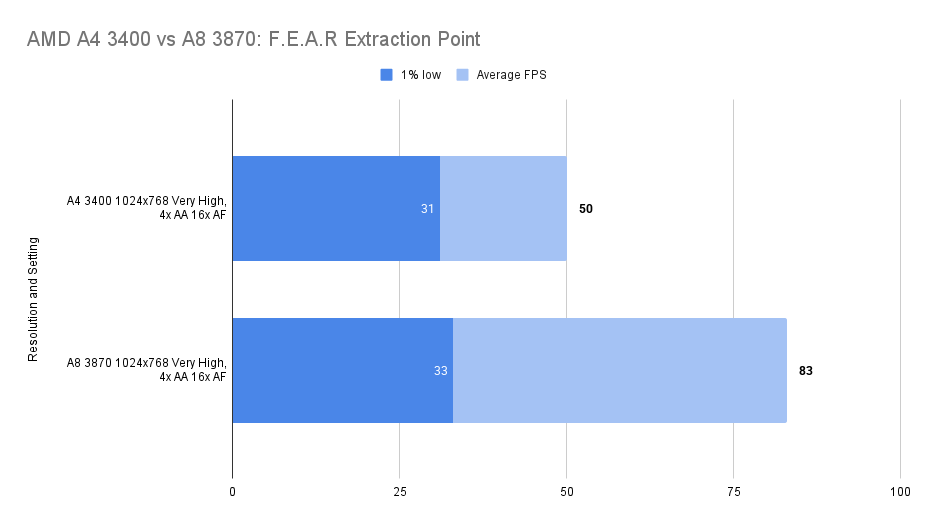
There’s no noticeable increase in smoothness, although it wasn’t an issue to begin with. The average framerate has gone up significantly, but the 1% lows haven’t kept pace.
FlatOut 2 (2006)
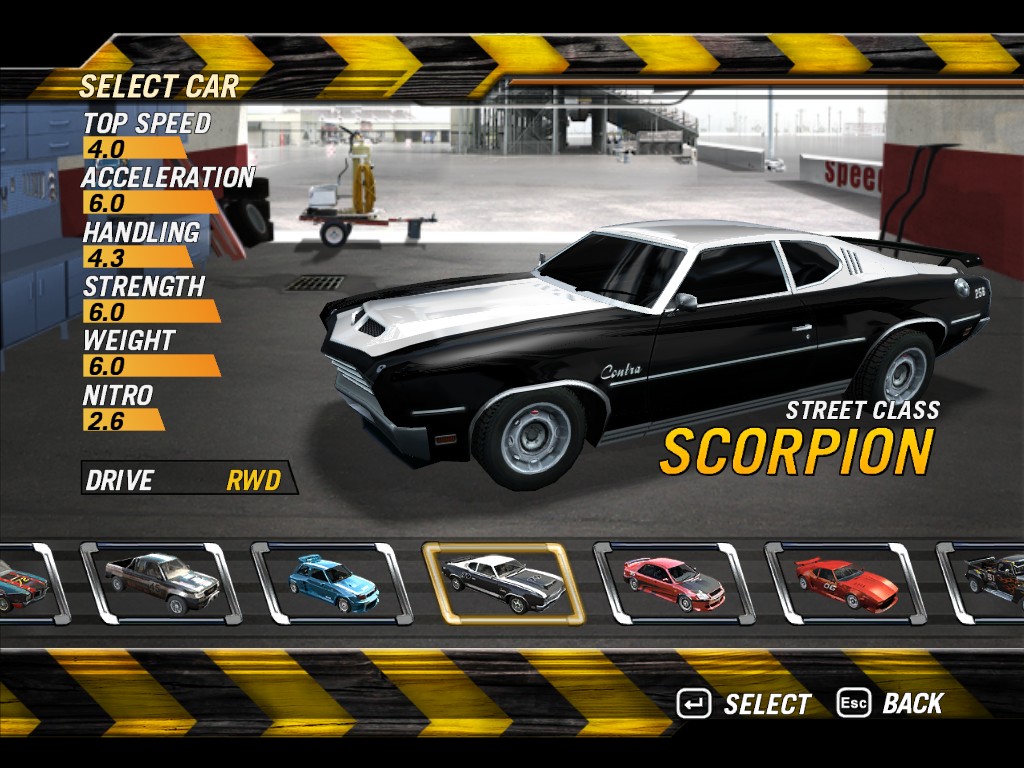
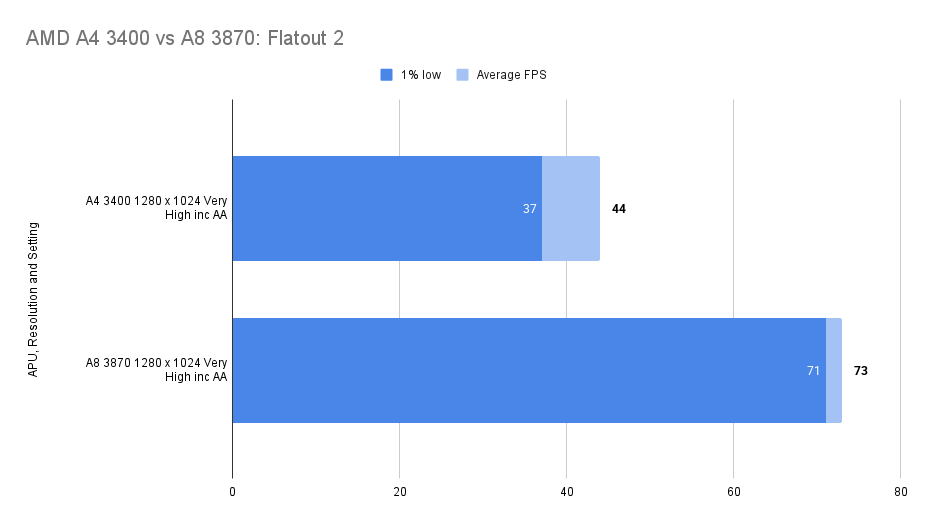
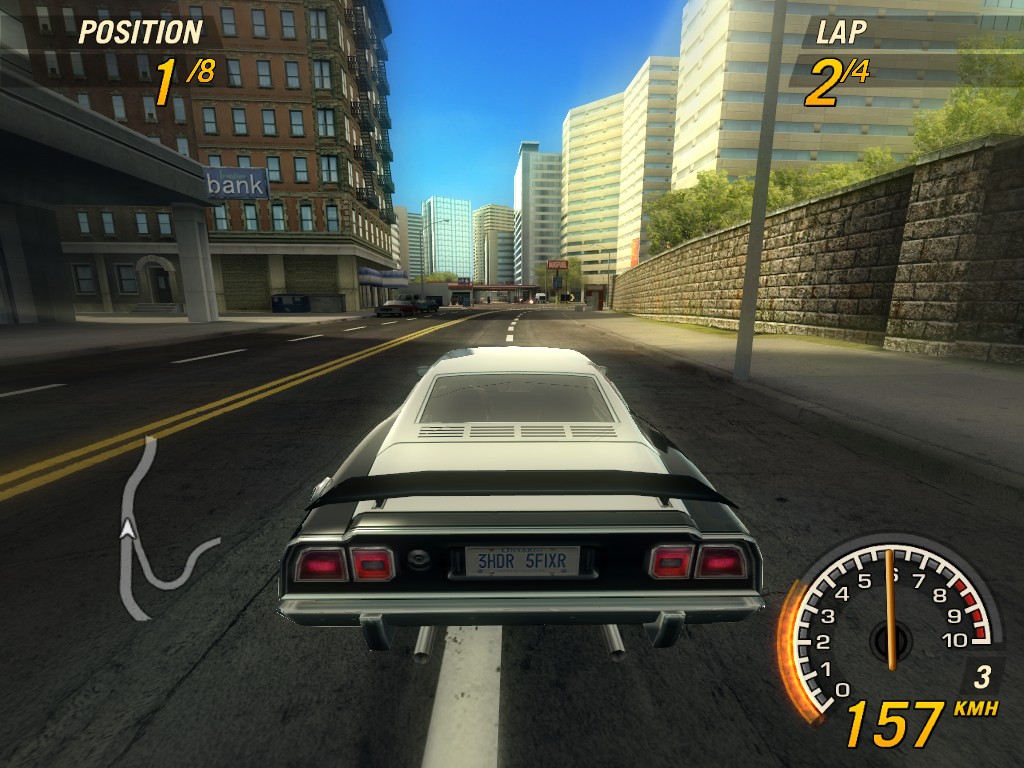
More Vsync limits I’m afraid but a great improvement, things could be faster if the monitor and software would allow it.
The Elder Scrolls IV: Oblivion – (2006)
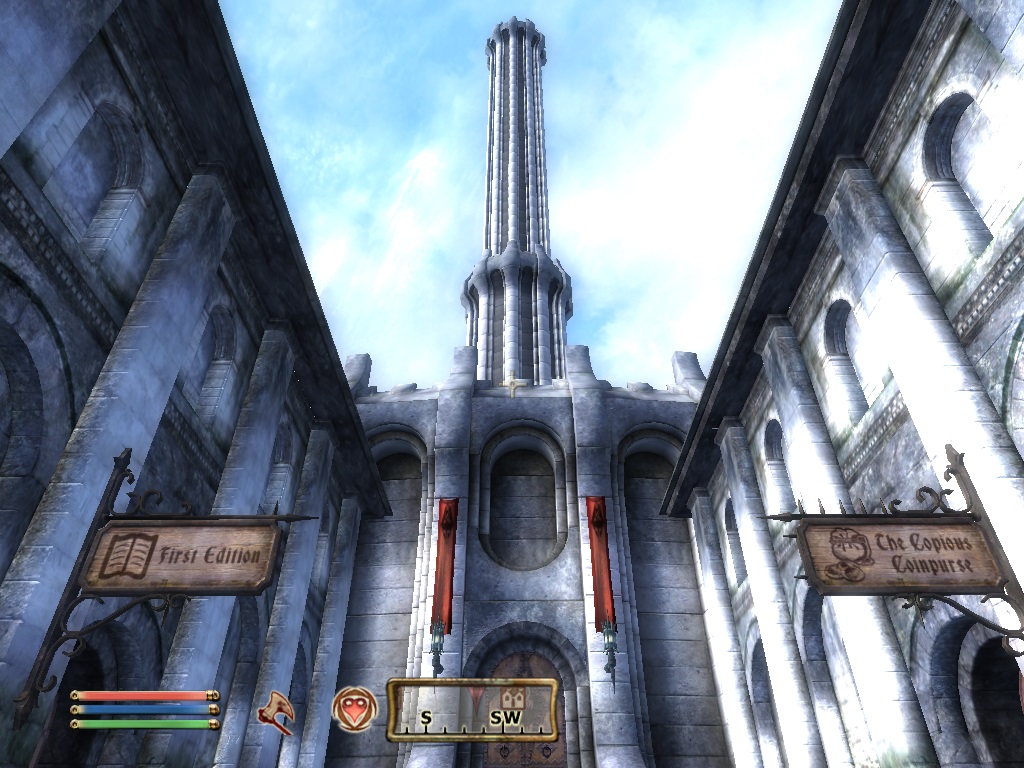
This is no small improvement. Upgrading to the A8 turns an unplayable experience into a playable one, and the extra buffer should keep things smooth even when the action gets more intense than this run around the capital city.
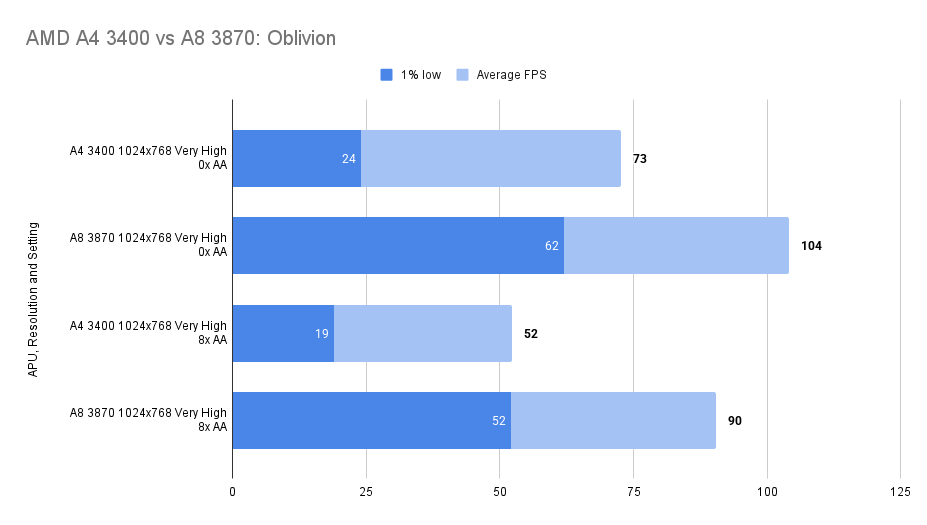
On average, there’s a 58% increase across both resolutions.
I imagine the faster RAM is helping this game more than most of the others.
Colin McRae: DiRT (2007)

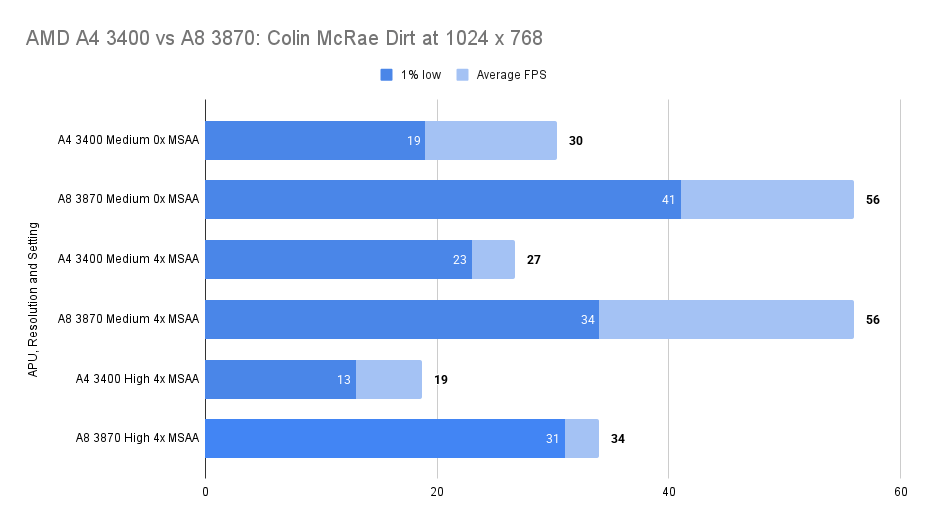
A 92% increase across all settings is a huge jump. I’m still not getting along with the game itself, but it becomes far more manageable once you’re no longer fighting the input latency caused by the A4’s poor framerate.
Benchmark Ten: Crysis (2007)
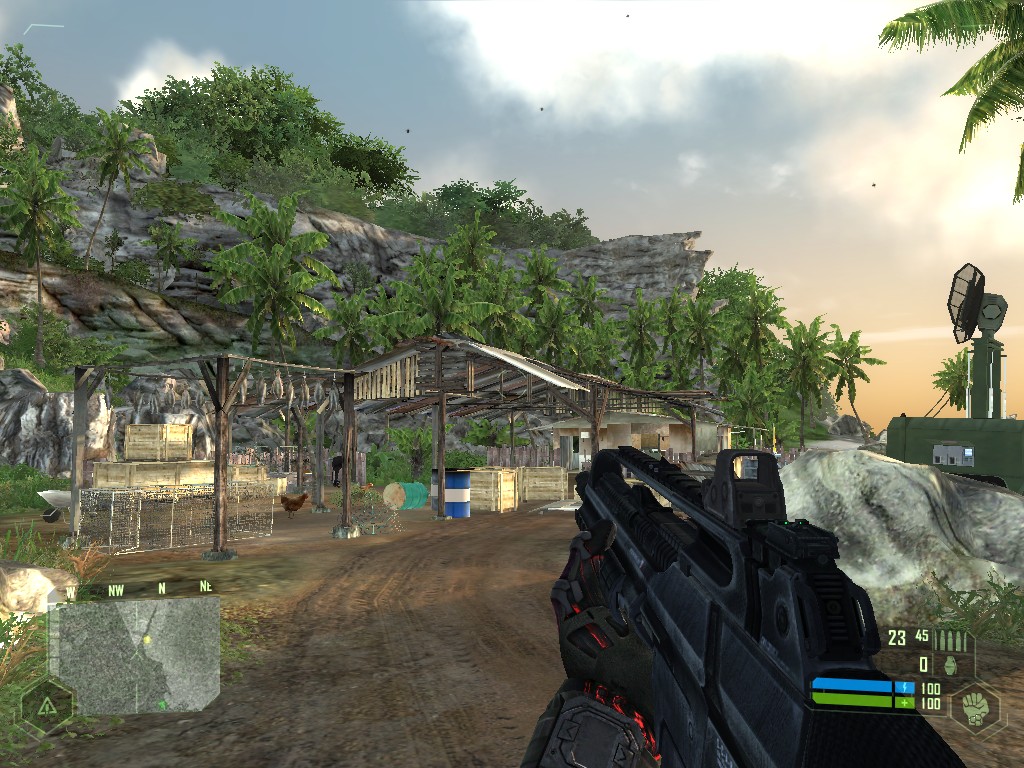
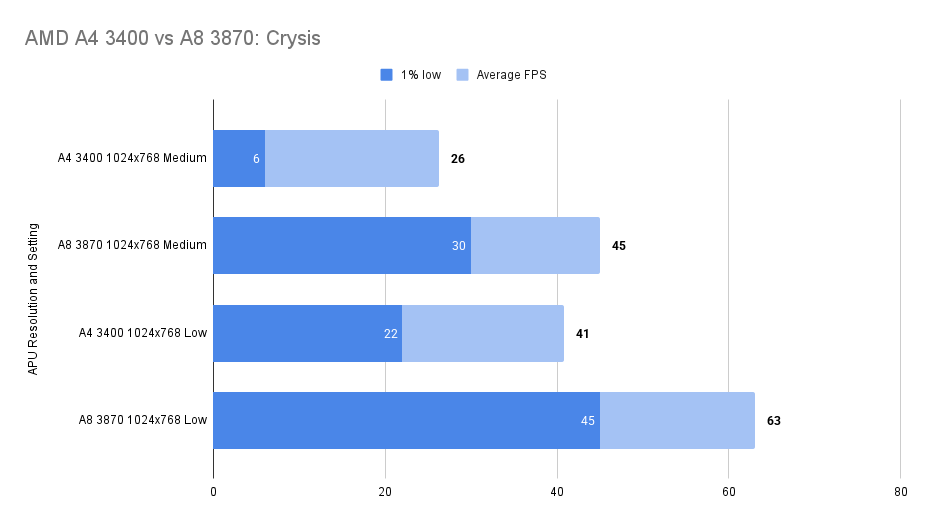
he 64% increase is exactly what this game needed to move from unplayable to playable. You’d probably still want to stick with the Low preset, or drop the resolution if you’re aiming for Medium.
Benchmark Eleven: Assassin’s Creed (2007)
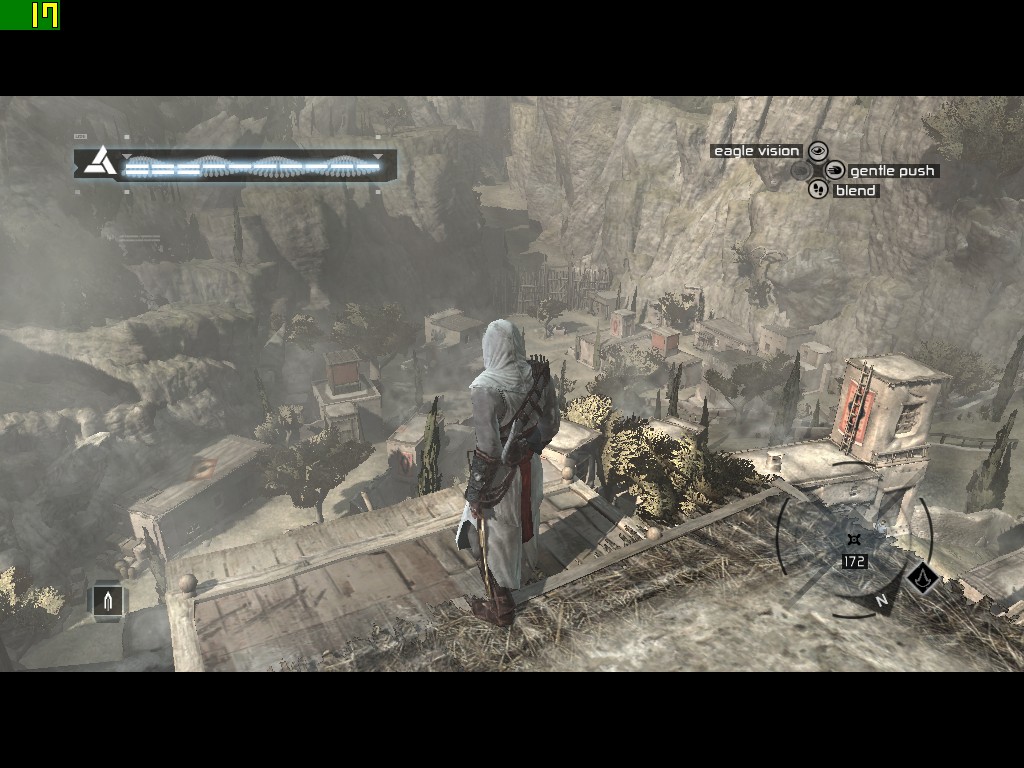
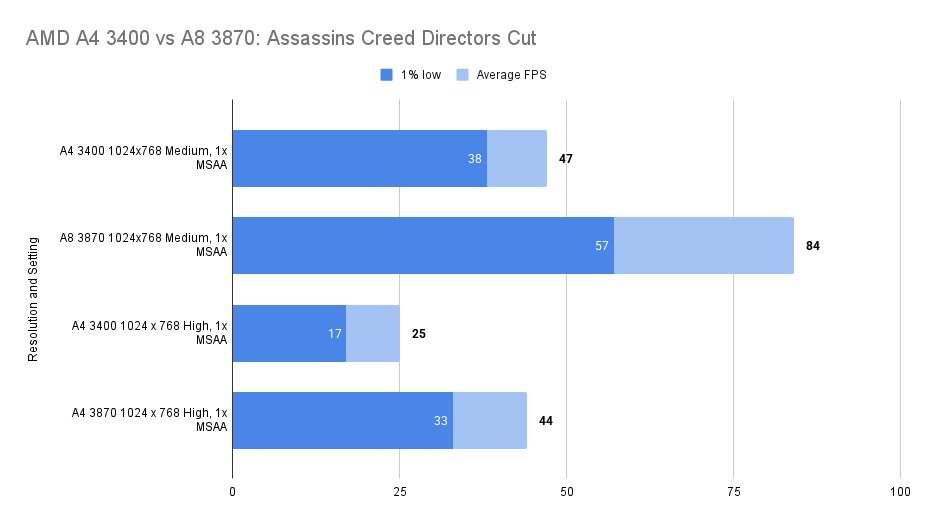
An impressive looking game before, the 77% increase in average framerate speed things up nicely.
Synthetic Benchmark Comparison
3d Mark 2001 SE
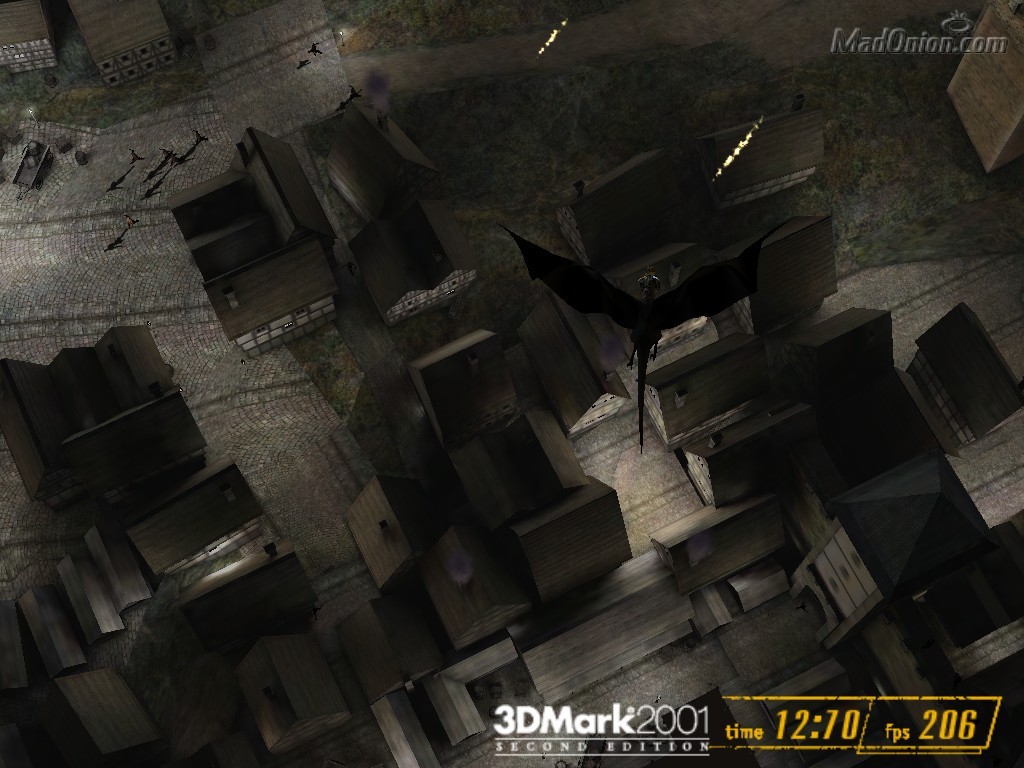
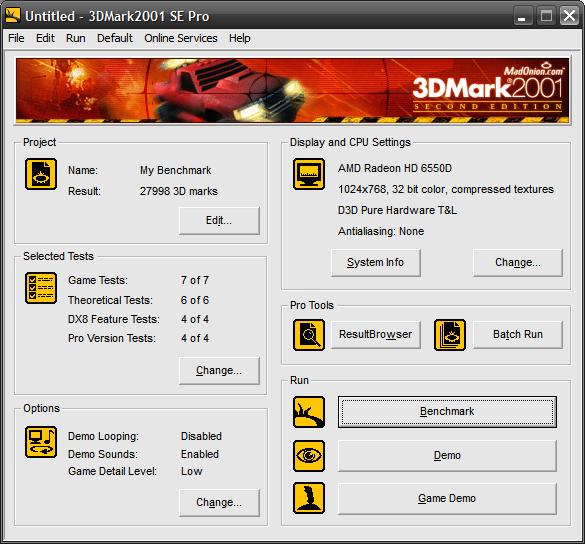
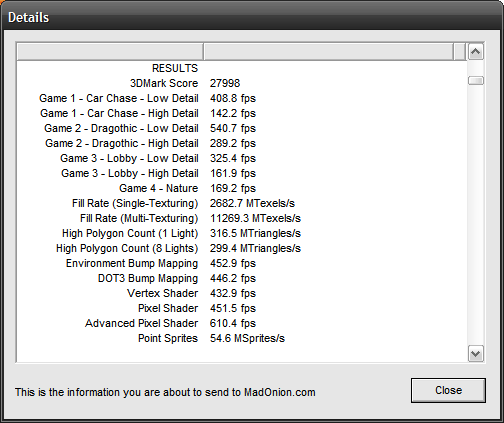
| A4 3400 | A8 3870 | Difference | |
| 3d Mark Score | 21,598 | 27,998 | 29.62% |
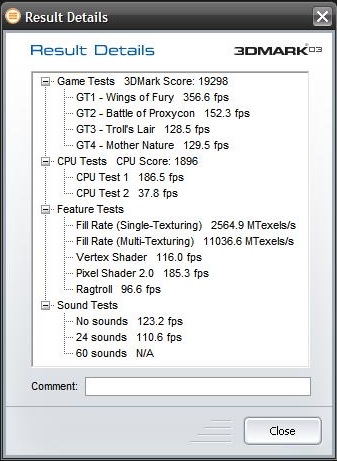
3d Mark 2003
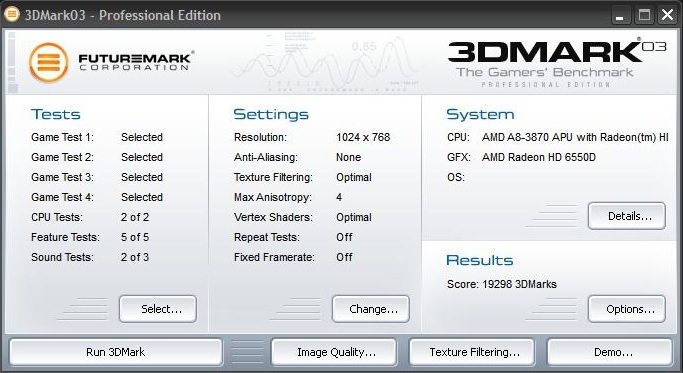
| A4 3400 | A8 3870 | |
| Score | 11,719 | 19,298 |
| Fill Rate (Single Texturing) | 1,823.0 | 2,564.90 |
| Fill Rate (Multi-Texturing) | 4635.50 | 11,036.60 |
| Pixel Shader 2.0 | 156.20 | 185.0 |
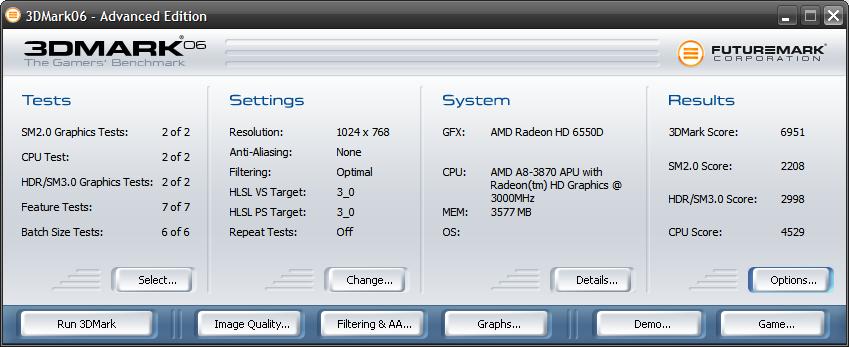
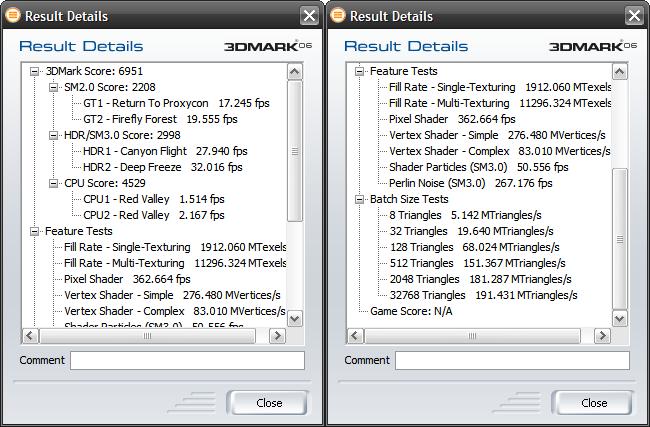
3d Mark 2006
| A4 3400 | A8 3870 | |
| Score | 4932 | 6951 |
| Shader Model 2.0 Score | 1564 | 2208 |
| HDR/Shader Model 3.0 Score | 2287 | 2998 |
| CPU Score | 2296 | 4529 |
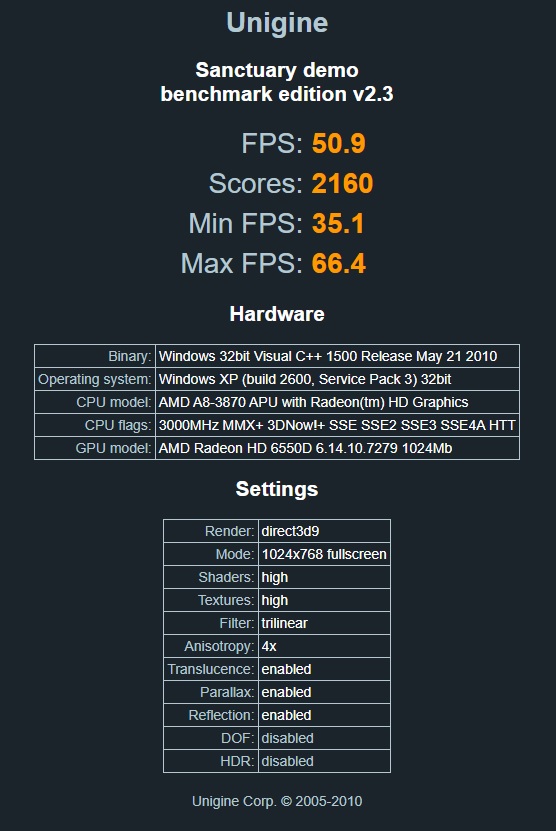
Unigine Sanctuary
| A4 3400 | A8 3870 | |
| Score | 1060 | 2160 |
| Average FPS | 25 | 50.9 |
| Min FPS | 16.7 | 35.1 |
| Max FPS | 66.4 | 31.9 |
Summary and Conclusion
Discounting the Far Cry results, where things didn’t behave properly, and the two tests that were limited by software, we’re looking at an average performance increase of around 64% when comparing the A8 with the A4.
In the end, the A8‑3870 doesn’t reinvent the FM1 platform, but it delivers exactly the uplift it needs. The gains aren’t subtle, and in several titles the jump from “barely playable” to “comfortably smooth” is transformative. With hardware this cheap, there’s really no argument for sticking with the slower A4 unless you already have one lying around. Paired with faster RAM and an SSD, the A8 turns this ageing platform into a surprisingly capable little XP machine, and a genuinely enjoyable way to revisit early‑2000s classics.
Sources
Being a flagship APU, there are a few more articles to choose from to review the performance of this APU and how it was received at the time and how it performed in the games of its own generation:
https://www.overclockers.com/amd-a8-3870k-apu-review/
https://www.guru3d.com/review/amd-a8-3870k-review/page-21/#final-words-and-conclusion
https://bit-tech.net/reviews/tech/cpus/amd-a8-3870-review/1/
Ash
 Ash's Retro Hardware Reviews
Leave a comment