Integrated Graphics in a Sis760GX Northbridge.. Any good? Unlikely.. let’s test it anyway.
Things were getting a bit mainstream with the recent 8600GT and 2600XT reviews, so it’s time to look at hardware that hardly anyone would ever use.
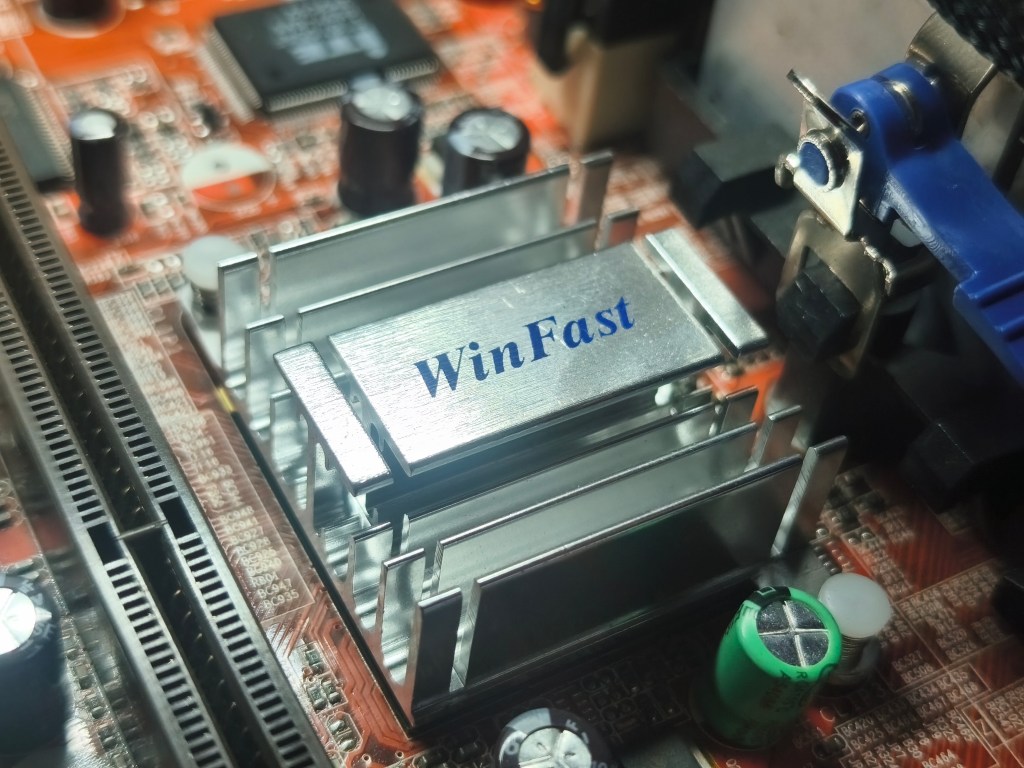
Well ok, so there is a bit more reason to it… I wanted to put together an AGP machine to test older graphics cards and the board and processor combo I settled on included this Sis Chip.
The board is a Winfast 760M02-GX-6LS from Foxconn which came an Athlon 64 3000+ CPU, I paired this with the maximum 2Gb of DDR.
Whilst installing and setting everything up, I thought I may as well run the integrated graphics as a base line, something to build up from and to get a suite of games installed.
The whole setup came together without any issues. I installed Windows XP for now, but I’ll probably need to add Windows 98 as well—unless I can find a way to benchmark really old titles directly from XP.
In my collection I’ve got some of the more infamous cards, including the Radeon 7000, the 9200SE, and the GeForce 4 MX. Potential future articles could match this against some low-end cards of the time and earlier.
Introduction to SiS Mirage Graphics
SiS introduced the Mirage branding for the integrated 2D/3D cores found in chipsets like the 661FX (Mirage 1). The line later expanded to Mirage 2 and Mirage 3/3+, appearing in both mobile and desktop northbridges.
These chips were positioned against Intel’s Extreme Graphics and early GMA solutions, as well as VIA/S3’s Unichrome. All of them represented the very lowest tier of GPU capability, where cost and power efficiency mattered far more than raw performance.
Information on Mirage 2 scarce. The most useful reference I came across was Notebook Check, which notes:
“The SIS Mirage 2 (also called SISM760 or similar) is an onboard (shared memory) graphics card, housed in the SIS M760 chipset. The graphics card takes a part of the main memory (although it can technically also feature some dedicated memory, but this was never used in a laptop). The 3D performance of the card is very bad and not even sufficient for very old games like Half Life 1 (1998).
Because of the missing pixel shaders (no DirectX 9 support), the SIS Mirage 2 760 is not able to display Aero effects in Windows Vista or Windows 7.“
They also provided information about the three versions of mirage which I have put in the below table
| Clock | Pixel/Vertex Shaders | DirectX | |
| Mirage M661FX | 130Mhz | 2/0 | 7.0 |
| Mirage 2 M760 | 200Mhz | 4/0 | 8.1 |
| Mirage 3 671MX | 250Mhz | 2/0 | 9.0 |
| Mirage 3+ 672MX | 250Mhz | 2/0 | 9.0 |
So, we are looking at a 2003 vintage 200Mhz GPU with DirectX 8.1 Support, 4 Pixel Shaders and no Vertex Shaders, figures matched by the short wiki article.
The processing of Vertices is therefore outsourced to the CPU in this instance, not a recipe for high performance in games.
Another resource which backs up notebook check is the below in German which google translates quite nicely:
Software and Drivers
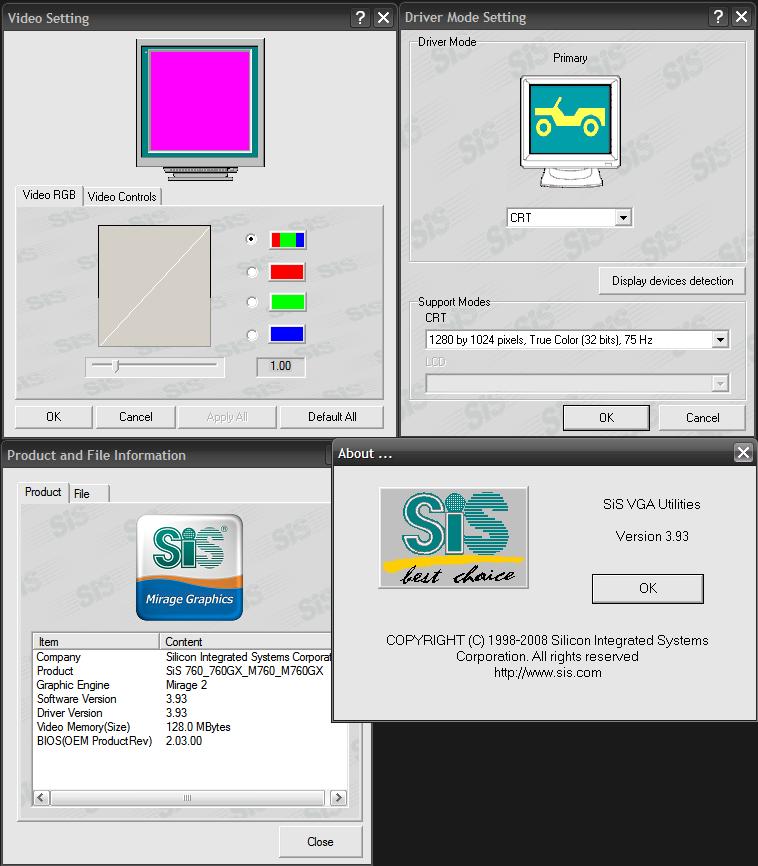
Options are a little sparse which is also very unsurprising I’m sure, but an icon appears in the task bar to remind you that you’re rocking SiS graphics.
Every screen available via these menus are below, not very impressive but welcome anyway I suppose.
GPU has little to say, very helpful!
I did try an earlier driver to see if the text on screen would be slightly less fuzzy but it wasn’t to be, the VGA system is just a tiny bit off.
Test System
The new AGP system then:
- Athlon64 3000+ (2.0Ghz)
- Winfast 760M02-GX-6LS Socket 754 Motherboard
- 2Gb DDR Ram (max 128 Mb assigned to graphics in BIOS)
- 120Gb SSD with Windows XP 32Bit Intergal Edition
- Sis Driver Version 3.93
Benchmarks
Superbike World Championship (1998)
Superbike World Championship is a realistic motorcycle racing simulation recreating the 1997 Superbike World Championship season, featuring official riders, bikes like Ducati 916 and Kawasaki ZX-7R, and 12 real-world tracks such as Monza, Phillip Island, and Laguna Seca, with modes for single races, full championships, practice, and customizable bike setups including suspension, tires, and gearing.
This is primarily a Direct3D 6/7 game on PC, using Milestone’s custom 3D engine with hardware acceleration support for early GPUs like 3dfx Voodoo, Nvidia Riva TNT, and ATI Rage Pro via DirectX 6.1
It requires DirectX installation for both 3D graphics rendering (T&L optional) and audio/input, with software rasterization fallback for non-accelerated cards, though Glide wrappers enhance Voodoo performance.
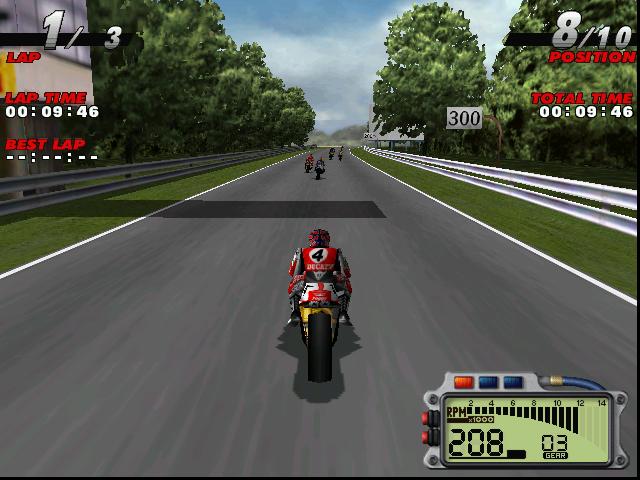
| Average FPS | 76 |
| Minimum FPS | 37 |
Performance Notes:
Well the performance is great, the challenging part is to make sure that the game is using the Mirage2 graphics and not just software rendering.
The requirements are the game are so low – only a Pentium 100 needed that perhaps the Athlon64 is just using software rendering to power through this.
There are no in-game settings, the manual on the cd is useless and there is just to one .cfg file which opens nicely in notepad but no clues in there about what to add. After an hour of tinkering, I couldn’t even find an option to change the resolution.
We know that the CPU is also handling the vertex’s, as there are no pipelines on the GPU so it’s going to be a team effort in any event.
I’m not really sure, but the game is very playable and enjoyable using this system. Zero compatibility or other issues.
This is the Sold Out Software version in a dual case, so likely released some years later.
Tomb Raider: Chronicles (2000)
Tomb Raider Chronicles is a third-person action-adventure game following Lara Croft’s legacy through episodic stories narrated by her allies after her presumed death, spanning underwater ruins, gothic manors, and high-tech labs with puzzle-solving and combat.
It runs on Core Design’s custom Tomb Raider engine iteration, a Direct3D 7-based renderer optimized for the late-90s/early-2000s PC hardware with improved lighting, fog effects, larger environments, and detailed character animations compared to prior entries.
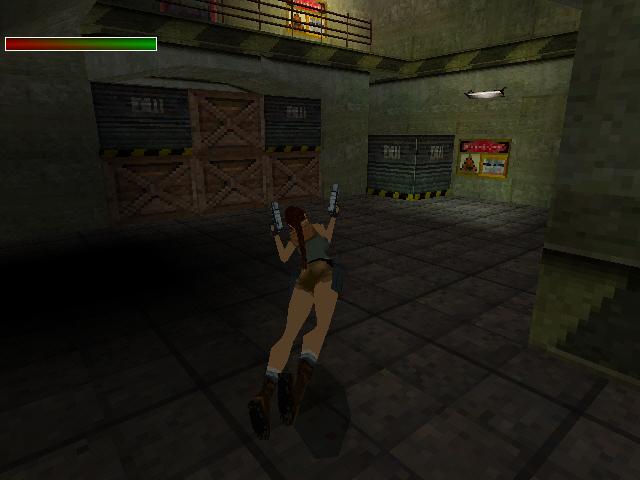
| Average FPS | 30 |
| Minimum FPS | 25 |
Performance Notes:
No simple ‘it just works’ here. Getting into the game took a lot of tinkering. Using win 2000 (strangely not 95/98) compatibility mode gets you into the game and loading into the first level takes a good long time – maybe 5 minutes or so as it hangs when the blue bar approaches 100%
Once quitting the game as well, he whole system seemed to take a few minutes to recover from the ordeal being sluggish and unresponsive.
Understandably perhaps, afterburner doesn’t run on these earlier titles but FRAPS is reliableunbothered.
Now as for actual in-game performance, it’s great! There seems to be a 30fps cap and our little on-chip graphics barely seemed to dip below it. For most of the testing I was running around trying to get my head around the controls and dodgy camera and the framerate was locked at 30fps.
The benchmark run recorded a drop to 25 which is pretty decent I reckon.
An early win for this older title, released a few years before the Mirage2.
Black & White (2001)
Black & White is a genre‑blending god game for PC where you rule over a living island, guiding worshippers and commanding a colossal, AI‑driven creature whose appearance and behaviour shift with your moral choices.
It is powered by a custom 3D engine built by Lionhead targeted at DirectX 7.0 hardware, featuring a continuous, zoomable world, detailed deformable creature models, and an almost HUD‑less, gesture‑based interface that ties directly into the game’s god‑hand fantasy.
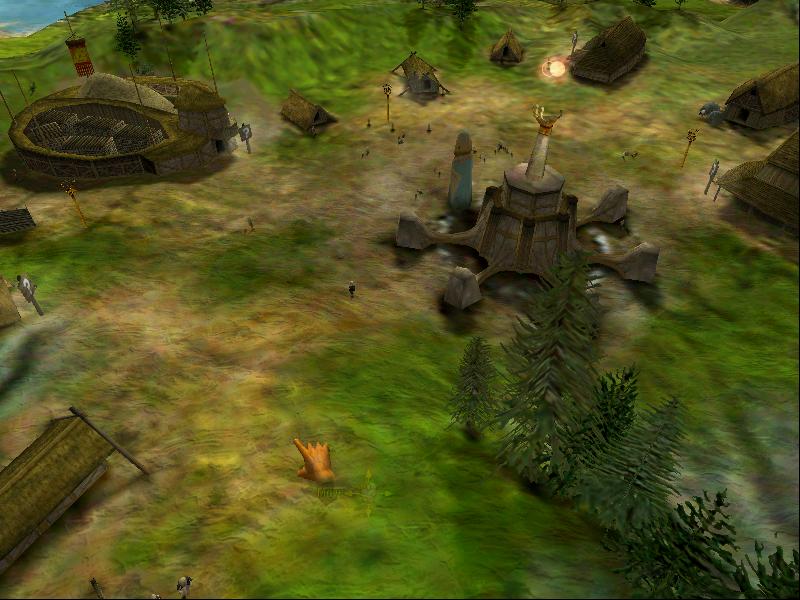
| Average FPS | 21 |
| Minimum FPS | 14 |
Performance Notes:
Not a game I played at the time it’s all very new for me. You are forced to play through a tutorial which was extremely painful using just the Mirage2 Graphics.
If anything, the 21fps sounds faster than the feel, not a success, another 45 minutes or so of my life that I wish I could get back.
Medieval: Total War (2002)
Medieval: Total War is a hybrid turn-based strategy and real-time tactics game set in medieval Europe and the Middle East, where you manage empires through diplomacy, economy, and massive pitched battles on 3D battlefields. It uses The Creative Assembly’s custom engine with a Direct3D 7 renderer, supporting large unit formations, terrain deformation, and early dynamic lighting for its 2002 PC release
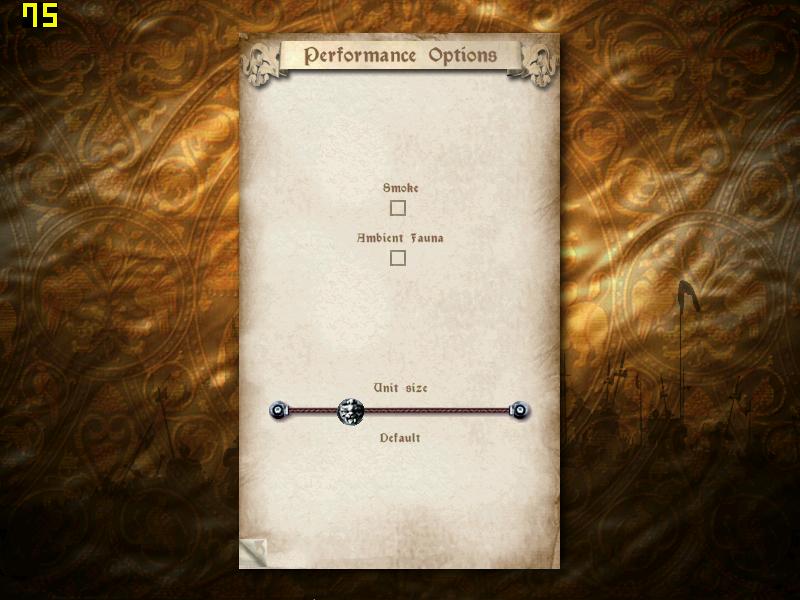

| Average FPS | 25 |
| Minimum FPS | 19 |
Performance Notes:
Hey now that’s not too bad, you can play like this… well I would have put up with it back in the day anyway.
Compatibility all is well, just goes straight in and the menu is snappy and responsive.
I did one of the few historical battles. Perhaps the CPU is doing the heavy lifting here, this is back in the days where units were made up of 2d sprites.
Still, fun times.
Grand Theft Auto III (2002)
Grand Theft Auto III is an open-world action-adventure game set in the fictional Liberty City, where you play as Claude, a silent criminal protagonist rising through the ranks of organized crime via story missions involving driving, shooting, and heists amid rival gangs and police chases.
This is primarily a Direct3D 8.1 game on PC, using RenderWare engine with hardware acceleration support for the major cards of the era. It requires DirectX 8.1 installation on Windows for both 3D graphics rendering (T&L acceleration via D3D) and audio/input handling, though software fallback exists at reduced performance
| Average FPS | 17 |
| 1% Low FPS | 12 |
Performance Notes:
When entering the game you get a shade of green instead of the intro sequence but the main menu looks fine.
at 640×480 16 bit things seemed to be ok at first but then I ended up dropping the draw distance right down as well.
17fps average, it actually felt better than it sounds but at the same time there were so strange looking graphical artifacts going on.

Jedi Knight II Jedi Outcast (2002)
Star Wars: Jedi Knight II – Jedi Outcast is a first‑person and third‑person action game set in the Star Wars universe, where you play Kyle Katarn as he returns to the ways of the Jedi, mixing blaster combat with lightsaber duels and Force powers across a series of story‑driven missions.
This is primarily an OpenGL game on PC, using an OpenGL 1.1‑class renderer derived from the Quake III engine. It still requires a DirectX installation on Windows, but that is for things like sound and input (DirectX 8.0a‑class) rather than for the main 3D graphics API
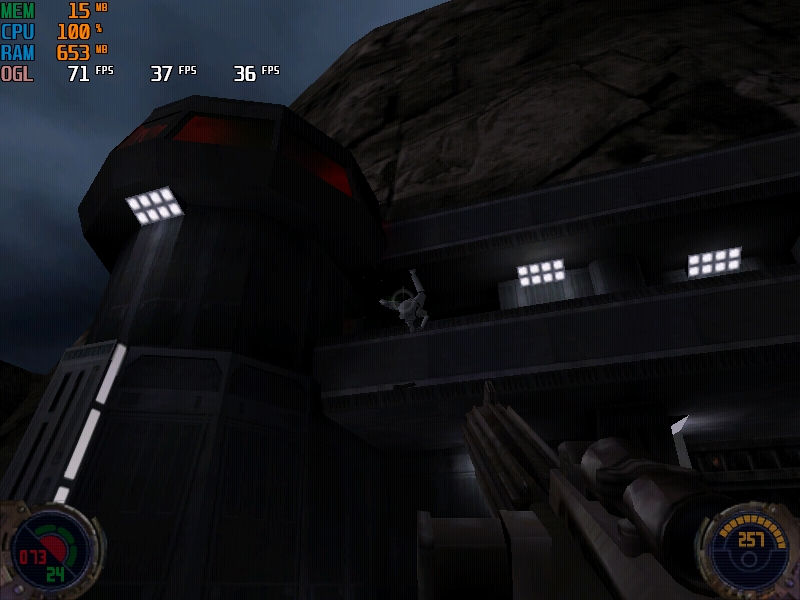
| Average FPS | 64 |
| 1% Low FPS | 33 |
Performance Notes:
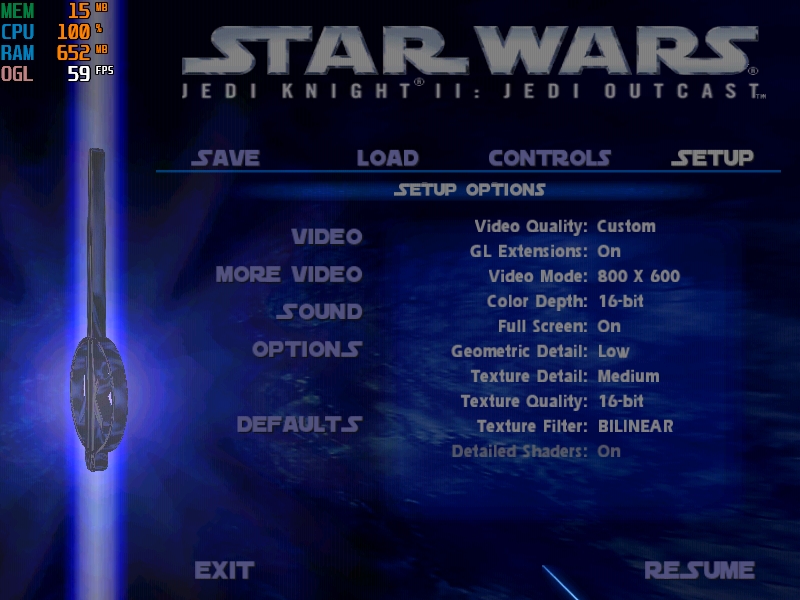
Playable! Definitely smooth enough even with Medium Texture details and 800×600, not the lowest 640×480.
More of a tribute to the game more than anything, still you can play this game which is would have been reasonably current at the time the chipset was released.
The Elder Scrolls III: Morrowind (2002)
The Elder Scrolls III: Morrowind is a first‑person, open‑world RPG set in the volcanic province of Morrowind, where you explore the island of Vvardenfell, join factions, and follow (or ignore) a prophetic main quest in a highly freeform way. The game runs on Bethesda’s NetImmerse/Gamebryo‑based 3D engine with fully 3D characters and environments, using hardware‑accelerated Direct3D and targeting the DirectX 8‑era feature set typical of early‑2000s Windows PCs
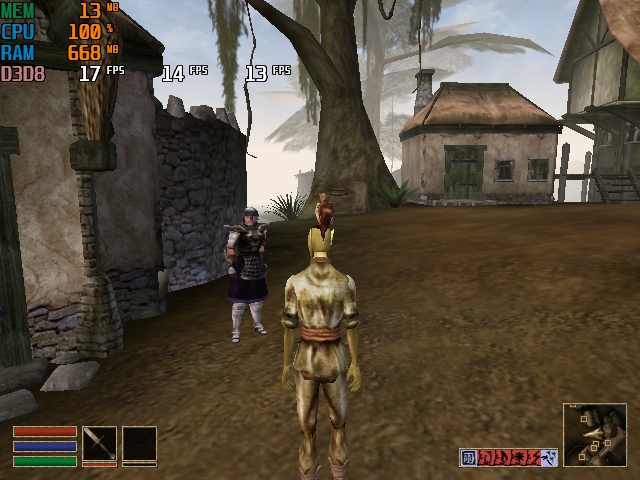
| Average Fps | 18 |
| 1% Low | 13 |
Performance Notes:
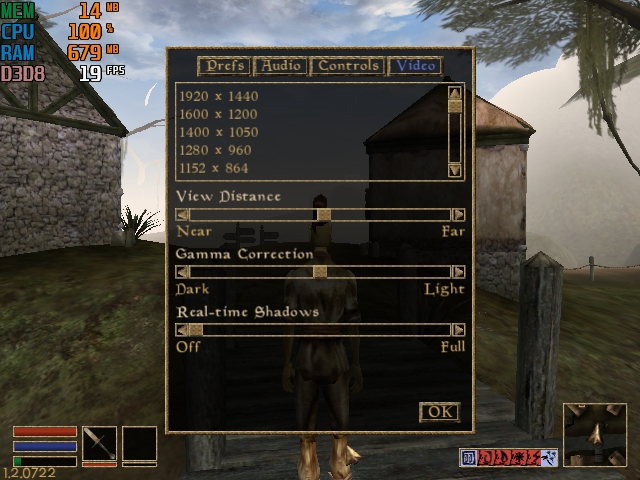
at 640×480 with an okish view distance the game ran.. poorly.
A few more frames per second could probably be found if the view distance would be brought in further but it would mean very jarring pop-in for everyone on screen.
Not a game playable with Mirage2 Graphics.
Mafia (2002)
Mafia: The City of Lost Heaven is a third‑person story‑driven action game set in a 1930s American‑style city, where you play taxi driver‑turned‑mobster Tommy Angelo as you work your way through a grounded, mission‑based crime saga. Its in-house LS3D engine renders a large streaming city with vehicles, pedestrians, weather, and day/night cycles, using hardware‑accelerated Direct3D from the DirectX 8‑era to deliver advanced effects for its time such as detailed lighting, reflections, and relatively high‑poly car models.

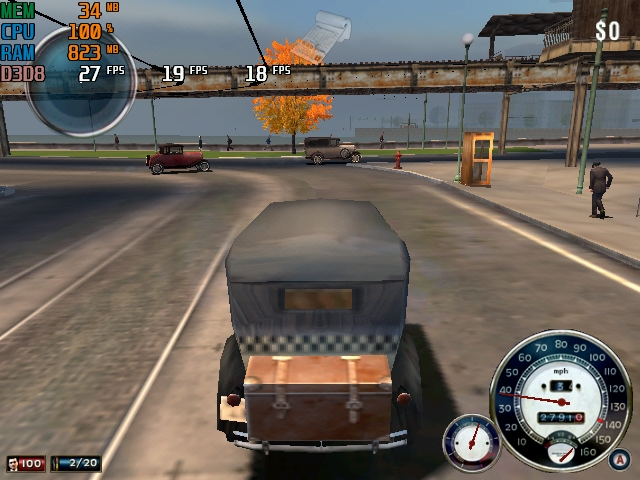
| Average FPS | 23 |
| 1% Low FPS | 17 |
Performance Notes:
Almost playable with a 23fps average framerate and a 1% low that isn’t too much lower. 640×480 doesn’t even look that bad.
Probably as close to playable as you can really get.
Unreal II: The Awakening (2003)
Unreal II: The Awakening is a first-person shooter where you command a small patrol ship, exploring alien worlds, fighting enemies, and uncovering a conspiracy in a squad-based sci-fi campaign with a focus on tactical combat and resource gathering.
It runs on Epic’s Unreal Engine 2, a major upgrade over the original with advanced skeletal animation, dynamic lighting/shadows, and complex AI pathfinding, using Direct3D 8.1 as its primary graphics API on Windows PCs.

| Average FPS | 24 |
| 1% Low FPS | 12 |
Performance Notes:
At 640 x 480 low settings we were close to having a playable experience in this game, it looks poor with the settings, much more so than Mafia for example..
it’s smooth enough until you want to shoot at something anyway!
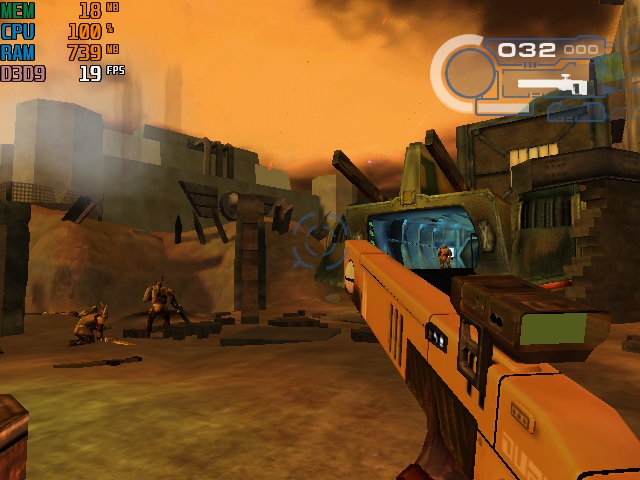
Warhammer 40,000: Fire Warrior (2003)
Warhammer 40,000: Fire Warrior is a first-person shooter set in the grimdark Warhammer 40k universe, where you play as an Imperial Guardsman fighting Tau invaders across planetary battlefields, blending corridor shooting with vehicle sections and horde combat.
It uses a modified iteration of the Serious Engine (from Serious Sam), delivering large-scale outdoor environments with destructible elements and particle-heavy explosions via hardware-accelerated Direct3D 8 on Windows PCs.
| Average FPS | 26 |
| 1% Low FPS | 11 |
Performance Notes:
At 640×480 setting with 16bit colour (the only option that seems to be available) the game chuggs along at a reasonable level though the 1% Low of only 11fps is unpleasant.
For some reason the game does show that DX9 is being used, which is hard to believe indeed.
Doom3 (2004)

Doom 3 is a survival-horror first-person shooter rebooting the classic series, where you battle demons on a Mars research base with tight corridors, flashlight mechanics, and jump-scare intensity amid a demon invasion.
It runs on id Software’s id Tech 4 engine, a ground breaking DirectX 9/OpenGL renderer with unified lighting, normal mapping, dynamic shadows, and high-dynamic-range effects that pushed early-2000s PC hardware to its limits.

| FPS Average | 6.8 |
Performance Notes:
Well it did technically run, but even at the lowest combination of resolution and graphics we didn’t get to double digits of average frame rate using the internal benchmark.
Textures were missing also, as disappointing as it is predictable.
Far Cry (2004)
Famous for being a DX9.0b title, the below is what you get when trying to run the game on DX8.1 capable integrated graphics:
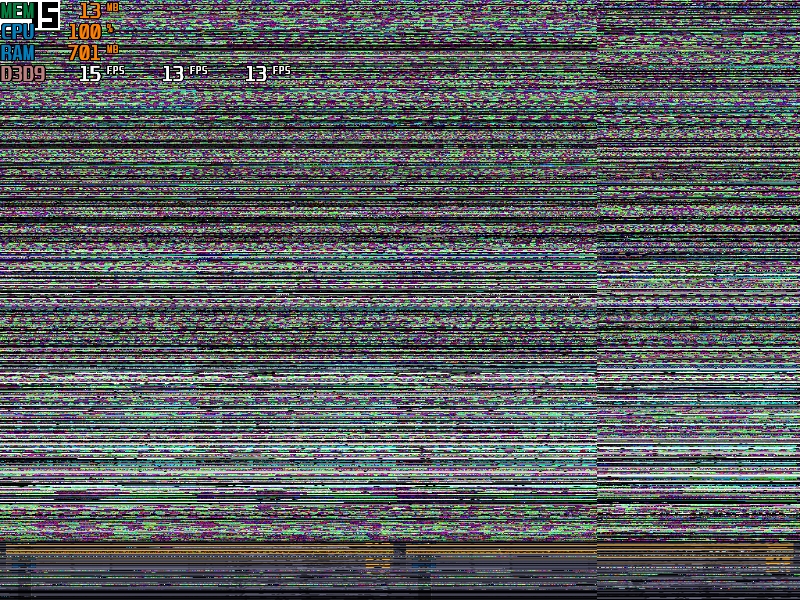
Happy to have done this for science you know.
Surprising that it actually loaded up!
Euro Truck Simulator (2008)
Euro Truck Simulator is a relaxing truck-driving simulation game where you build a hauling business across a scaled-down Europe, managing routes, cargo, and a fleet of realistic rigs in a peaceful open-road experience. It runs on the early iteration of SCS Software’s custom truck simulation engine with DirectX 9 graphics support, featuring detailed vehicle interiors, dynamic weather, traffic AI, and large procedural road networks optimized for mid-to-late 2000s PC hardware.

Performance Notes
I thought I’d give this one a go as it supports OpenGL graphics even though it was released far in the future in comparison to the chipset release date.
This was definitely too far though, it did sort-of run but with textures completing missing and performance not high enough to get into the actual game. This at 640×480 16bit.
The DirectX option in the Launcher was greyed out so that DX9 / OGL comparison wasn’t possible.
Definitely not playable!
Synthetic Benchmarks
3d Mark 1999
Would not run, kept complaining about DirectX 6 not being installed. I’ll update when I set up the windows 98 installation.
Annoying, it’s run fine on XP on other systems.
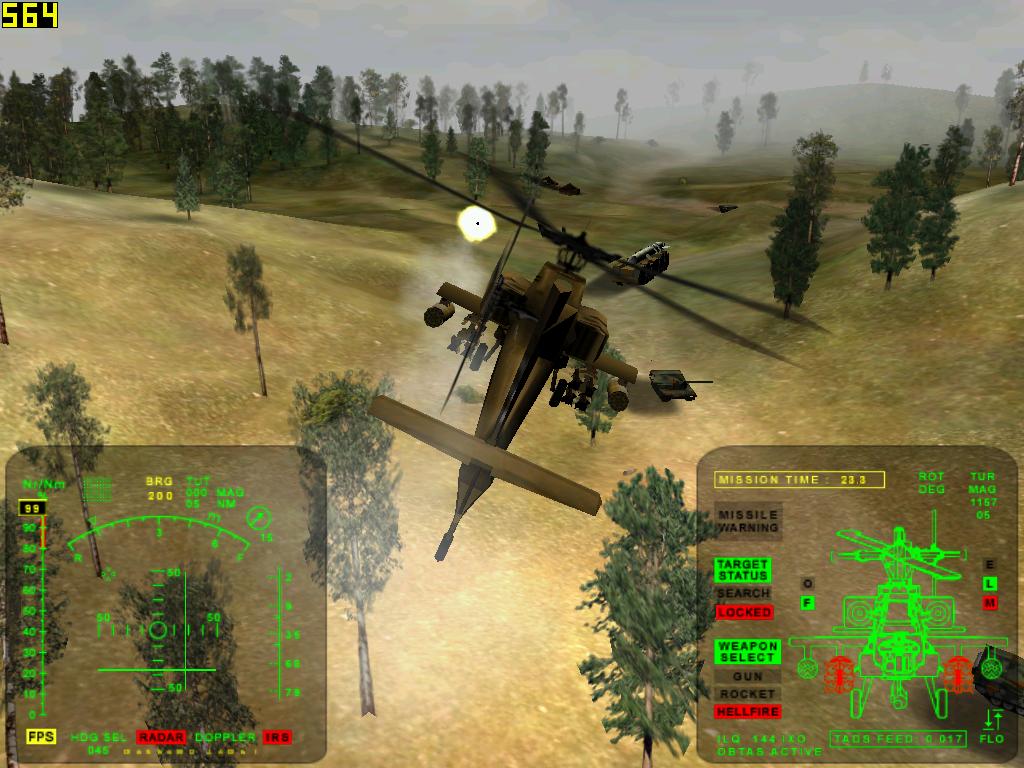
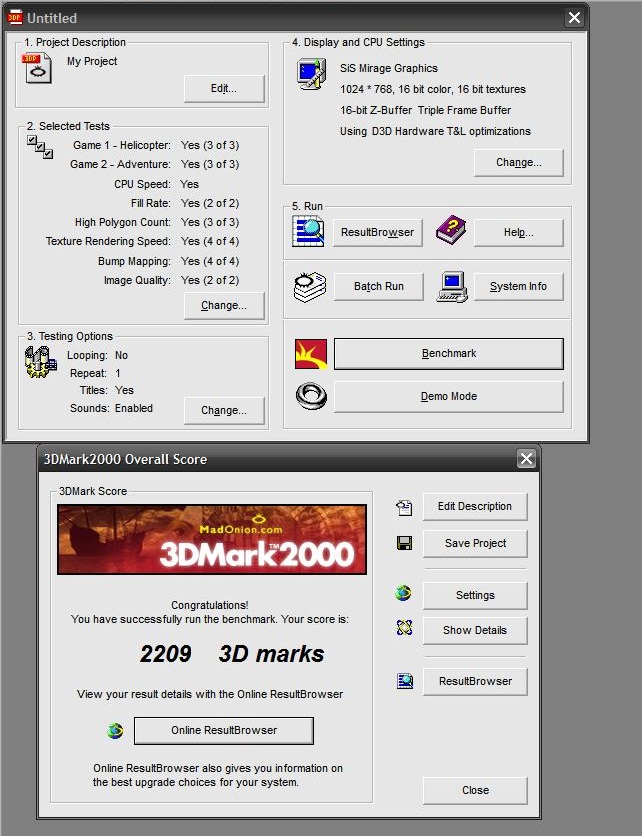
3d Mark 2000
3d Mark 2001SE

3d Mark 2003

Summary and Conclusions
Well there we go. As a Windows XP option, the Mirage2 is pretty awful but not entirely useless as there are a few playable games.
The specs themselves are not ideal, the 4 pixel pipelines is a good start but low clock speeds, system ram and no vertex shaders… it’s clearly not designed for much.
Compatibility seems mainly fine though, GTA3 acts weirdly but it’s done that to me on a few other cards. otherwise games seem to work ok.
There are drivers for Windows 98 and perhaps this is where the chip can be of some use. I will get an installation of this earlier OS onto the system shortly and perhaps update this article.
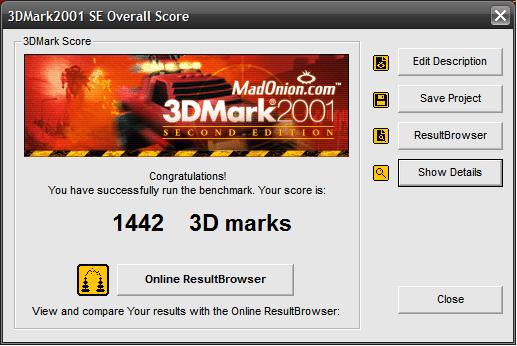
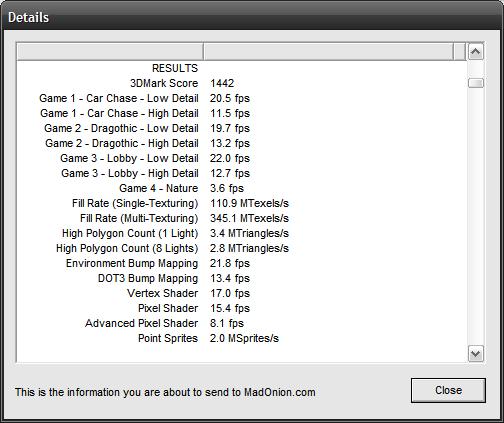
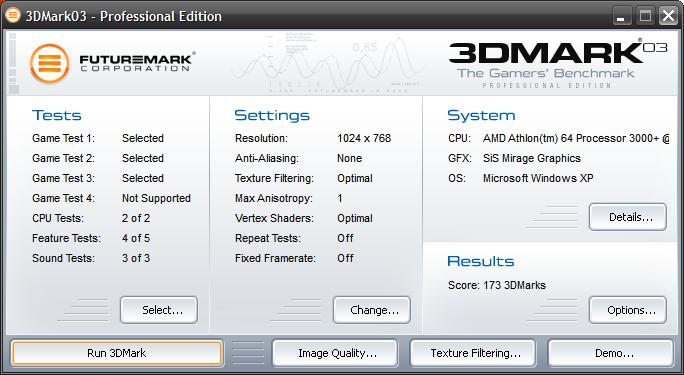
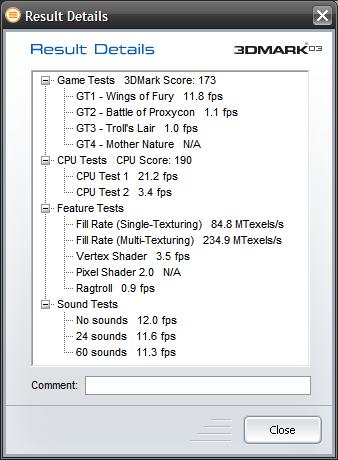
Looking at 3d mark scores, this chip could perhaps compete with cards like the GeForce2 MX or perhaps some of the first radeon models.
Still, the system is up and running and now I have all of these games installed and good to go to test some more exciting hardware.
Now I just sit and wait for someone somewhere to google ‘Mirage2 Graphics Retro review’ and hope they read my article.
If that’s you, hi.
 Ash's Retro Hardware Reviews